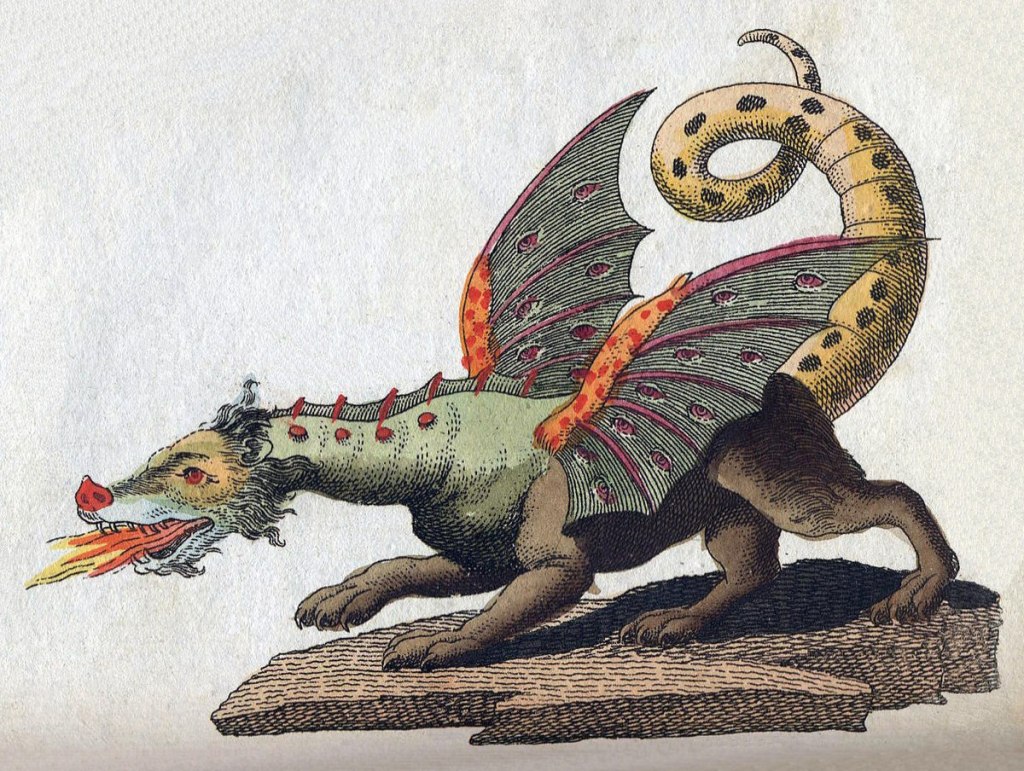
Before we get into it, fantasy covers a number of subgenres, and some of you may accuse me of tunnel visioning on epic fantasy today. This is true, and I am largely using fantasy as a shorthand for epic fantasy in this article because it doesn’t do for us to get lost in the hangups of how an urban fantasy works when that’s a wholly unrelated topic.
Fantasy is a fascinating genre, not just because of how it allows for stories that defy any real world setting to come to life, but also because of how… codified it is. The three grandparents of modern fantasy are J.R.R. Tolkien, C.S. Lewis, and Ursula K. Le Guin, authors of The Lord of the Rings, The Chronicles of Narnia, and Earthsea, respectively. They all did more than just those three stories, obviously, but those are their defining works in popular culture, as well as the stories most relevant to today’s topic. Whether they intended to or not, the three of them put together worlds that would come to define the genre, with Tolkien’s influence being the most obvious, since he codified the traditional fantasy races (elves, orcs, dwarves) we see in so many works that expand beyond just human characters. There’s a certain aesthetic to the genre that only a small handful of authors really break away from, consisting of the setting resembling medieval Europe where nobles and the odd chosen farm boy are fighting wars and making long journeys that involve meeting a handful of stock fantasy creatures. Some stories break away from this to varying extents (Wheel of Time has its own unique blend of fictional creatures, Harry Potter largely ditched the physical journey, Stormlight Archives is really invested into the idea of crabs above all other creatures, and Discworld is… Discworld), but few are written without the influence of these three stories showing up in some capacity. The “grandparent stories” of course drew from both real-world mythology and religion in creating their worlds, but we can see a few shared traits, and today I want to focus on the fantasy creature.
The Dragon.
This is a creature that doesn’t necessarily look the same in every story, but it shows up in every worthwhile fantasy story in some capacity. You might be disagreeing already, siting some great story without a giant fire breathing reptile, but hold up. Because to say a dragon is in every story, we have to define what a dragon is.
They’re among the most universal fictional creatures because every culture has had some form of dragon in its stories. Which is interesting because the details vary wildly between regions, with a vaguely reptilian appearance being the only guaranteed similarity. The Norse had their tale of Fafnir, a dwarf cursed by the gold he love such that he became a dragon, described in the traditional western sense, but they also had the giant snake Jormungandr, who is often called a dragon as well. Plenty of Asian cultures featured benevolent dragons in the form of horse-headed serpents that soar through the sky and maybe live in rivers. The Aztecs had Quetzalcoatl, a feathered serpent who flew through the air and seemed to control the weather (most of his dedicated stories are lost to time, so we have to extrapolate some). Ancient Greece had the hydra, typically depicted as resembling a wingless western dragon, plus or minus a few heads. I could go on listing examples, but the point stands that every culture has some idea of what a dragon is, and even if these creatures didn’t seem to be quite the same, they all get grouped under the same title today, as powerful reptilian creatures possessing some sort of magic. Why we all have these myths is up for debate, though most point to misinterpreting dinosaur bones as the primary cause. Really, it’s no wonder the creatures would make some sort of appearance in the “grandparent stories,” though we need to dig deeper into the western origin of the dragon to get into what made these ones special.
Specifically, we need to talk about their depictions in medieval European art, since that’s where these three stories primarily draw from. While we all know dragons breathe fire, this wasn’t the default originally, as the earlier mythological dragons weren’t associated with it. Quetzalcoatl and the Asian dragons were primarily associated with wind, water, and storms; Fafnir had poison breath, and the Hydra exhaled corrosive liquids. From the research I’ve done, the first instance of a fire breathing dragon appears to be Beowulf, which, as everybody who read it in high school knows, was translated and retold all across Europe in its heyday. Interestingly, it was also venomous, perhaps in a direct reference to Fafnir’s breath. This dragon became the default look for the creatures in European art, often acting as a stand-in for either the devil or a great calamity. While we can enjoy the irony of using dragons as a devil stand-in while they were held up as godly beings in other cultures, I’m more interested in what Beowulf’s dragon took from Fafnir: the hoard of gold. The inciting incident that brings the dragon into the story is a commoner stealing a golden chalice from the dragon’s cave of riches, which makes this the second instance of a major European dragon being known for hoarding gold. And that makes it integral to this discussion.
Tolkien was on record as having said there were only two “true dragons” in literature: Beowulf’s dragon and Fafnir. Keeping that in mind, it’s easy to see how he, in an effort to create the “third dragon” produced Smaug when writing The Hobbit. It’s a clear mix of the four things we’ve established about European dragons at this point; Smaug is a flying reptile that breathes fire and hoards gold, while serving as his story’s ultimate antagonist/threat. Lord of the Rings notwithstanding, since The Hobbit was initially a standalone. How does this compare to the dragons of Narnia and Earthsea? Narnia’s only dragon, in the literal, being a giant flying reptile sense, is a direct reference to Fafnir in The Voyage of the Dawn Treader, where Eustace is temporarily transformed into a dragon as punishment for his character flaws. Earthsea, meanwhile, features them in the calamitous sense, as more forces of nature than creatures with an understanding of good and evil, though these ones can be spoken to and warded off via true name magic. While elements of the other two snuck into the modern image of the dragon, I feel safe in suggesting Smaug would become the template for the literal evil flying lizards that became genre mainstays.
My question, however, comes down to defining what the dragon is. I don’t mean in a physiological sense; we understand the flying crocodiles. I mean in a storytelling sense. Taking everything we’ve covered together, we can break the dragons into a few categories and purposes:
– Calamity: Jormungandr, Earthsea’s dragons
– Something Sacred: Quetzalcoatl, Eastern dragons
– Ultimate Enemies: Smaug, Beowulf’s dragon
– Punishment for a Flaw: Fafnir, Eustace
– Grand Trials: Hydra
These can be further merged together with a little literary analysis, to reach what is, somewhat predictably, Beowulf’s dragon. The creature, as something capable of killing Beowulf, is otherworldly and powerful in a way nothing else in the story is. It is no threat to the world until its gold is stolen, at which point it becomes an amoral calamity wiping out villages. It is both Beowulf’s final foe and the only thing dangerous enough to bring his arrogance in battle into question, and helping kill it is the grand trial that produces Beowulf’s successor. The dragon is not about the creature itself, but about the role in the story. The dragon is the ultimate threat that brings the story together. In this regard, I view dragons not just as the winged reptiles, but as whatever fits that narrative in the story.
I’m far from the only one who takes this reading of the creature. A quick visit to TV Tropes gives us the page “The Dragon” which, while perhaps named as such for villainous dragons, is instead about villainous seconds-in-command, the foes that the heroes tend to spend most of the story fighting. Often times, the defeat of these characters serves as the proper climax to the story, or the signaling of a turning point, with the actual villain’s defeat often being a formality dealt with either shortly afterward or just beforehand. Case in point, let’s look at some examples. In Final Fantasy 7, Sephiroth is ultimately the dragon, serving as the final challenge who ties things together after the defeat of Hojo, who was responsible for the game’s events. Or in Persona 3, the Strega members serve as the true antagonists, while Nyx is the story’s dragon, fought as the true climax after the main villains are defeated. To go back to Narnia using this definition, there’s a second dragon in the form of Tash, a god of entropy and decay the heroes encounter in the final book; while “defeated” quickly, Tash ties the themes of the story together even though it was not the primary antagonist of the story, who was defeated a few pages before its appearance. While none of these three resemble a dragon in the traditional sense, Sephiroth, Nyx, and Tash all serve as the the dragons of their stories, and I would firmly argue they are the real dragons, even though more traditional looking dragons appear in all three stories.
So why do we stick to the reptilian monster as being “The Dragon,” if fulfilling the role doesn’t require any particular appearance? Frankly, it’s a design that combines most of what humanity fears into an equal. There was a time when a wolf sighting was cause for alarm and drumming up a hunting militia, but as humanity conquered the natural world, I feel like we’ve largely lost that fear of animals as a species. The dragon combines the armored hides of reptiles, the flight of a bird, the size that can’t be measured, the claws of bears and jaws of sharks, with a human-level intelligence and a ranged capability in the fire breath. This produces the last bastion of nature against us, the one animal we could still fear despite all out advancements. Just as dragons are often the last bastion of magic or the old world in stories, our fascination with them is the last bastion of our societal fear of unknown nature. I think we all need, both in our stories and in our lives, something magical to strive towards or against.
To that end, I’m glad we can put a name to it, and glad that it persists across our stories. Because if they mean what I claim they do, there will always be dragons in this world.
 Nerdcrash!