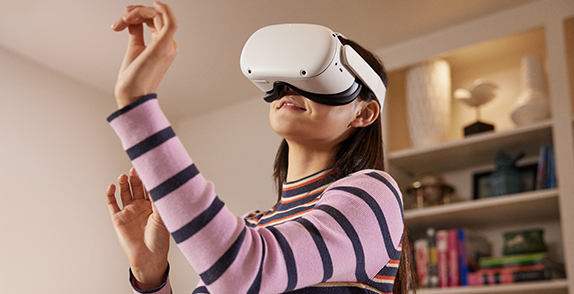
For me video games have always been about the games themselves. The stories and gameplay they bring make the industry what it is. However, some have more of an interest in the hardware of the industry. Advancements in consoles, PC components, and controllers excite gamers as these help propel the experiences that the games offer to new levels. For example, many are excited about the new Nintendo console that is around the corner. Although the Switch is vastly outdated now and very much could use an update, I’m not looking forward to buying a new console when the present one does the job. But I am not here to talk about the new Switch, but the most overrated piece of hardware in gaming, VR.
VR, or virtual reality, in my opinion is the most pointless and overhyped aspect of modern gaming. VR was first invented back in the 60s with the Sword of Damocles. Since its invention people have fantasized full haptic suits and gloves to fully experience a video game, very similar to the game depicted in Ready Player One. However, much like the theme of the book and movie, such integration into a fantasy world is unhealthy. I enjoy immersing myself into a video game as much as the next gamer, however there can be too much of a good thing. But that isn’t my main gripe with VR. My gripe is that the quality of the games themselves that VR pushes is utter crap.
I have played with VR once in my life. My cousin once brought it to a family gathering and I kinda hogged it. Not proud of that moment. But I can say this, after that one day of playing VR, I never need to touch those systems again. I played on the Quest I believe and played two titles: Beat Saber and Vader Immortal. Both titles were basically the same swing the joysticks strapped to my hands around like lightsabers. Now while the initial dopamine for these games was fun, it quickly went away. I only kept playing for so long to beat a certain level in Vader Immortal. But by the end I didn’t really get too much from the experience. My disdain and lack of interest in VR is categorized into the following reasons: the system is not consumer ready, the control scheme is clunky as hell, and there are no games to play that are worth my time.
Opening up with the biggest problem with VR that I see, the systems available now are not consumer ready. To have a VR headset, you first have to fork over a ludicrous amount of cash for one of these headsets; $300 for a Meta Quest 2 or over a thousand for a Valve Index. You can buy a functional console with a wide library of strong titles or even a suitable PC rig with that can of cash. On top of the price requirement, you need a space to play VR. Now for traditional gaming consoles, all you need is a TV or monitor with the proper cables and you are good to go. With VR you need an open space so that the player doesn’t smack into a piece of furniture, as well as a monitor to hook up into. Why a VR headset needs a monitor as well is beyond me. Most people don’t have an open space to qualify for the headset. Sure, many have a family room or den that can qualify but other people surely use the space. Not only that, but the headsets are battery charged and although the batteries have gotten better over the different editions of VR headsets, they still are also laughable. Doesn’t help that these headsets need you to create an account to use, like the Quest requires you to have a Facebook account which is basically sharing your data with that company. With the high cost of living, what gamer can afford to purchase a VR headset? Normally the average person has one console that they can afford due to their high cost. So, if the causal gamer isn’t going to be able to afford or have any interest in a VR headset, these consoles will be targeting the hardcore gamers, like me. The problem with that is the quality of titles and control scheme just aren’t up to par with traditional games.
As a player, my biggest gripe with VR is that the feel of these games is clunky, as if they were pulled from the nineties. Now I understand that this technology is still in its adolescence and isn’t to par with say, a PS5, but that’s my point. If a company wants to push a VR headset to the everyday gamer and market it as the next step into the future of gaming, make sure that it is of quality. In game, I feel that my movements are slowed and robotic. Sometimes my range of motions weren’t picked up by the headset. Now I’m a tall guy, so maybe I was a bit too tall for the headset or my limbs are too long. But that shouldn’t be a problem. The VR headset models that are available now are basically prototypes that should be marketed to tech heads and collectors. That is who these headsets should be marketed to. When I watch gameplay of a VR title a chill goes down my spine with how slow the enemies are, the poor graphics and out of date combat. Not exactly what I want to play on a console with a $300 price tag.
When it comes to games for these headsets, many are just a load of crap or nothing of note. That doesn’t mean that there are no good games. Half Life Alyx is good for what it is, although many were disappointed that it took the place of the mystical Half Life 3. Half Life Alyx is the pinnacle of what VR games can reach in this stage of their life span. Having to load each magazine, the physics engine, and the ability to interact with the environment at such is a scale is vintage Half Life again, yet the title is held back by the technology. At best Half Life Alyx is a good tech demo. Other good titles are first person horror games like Resident Evil that are ported over to VR. These games are dumbed down for the VR consoles and although the stories are intact, the gameplay is compensating to work on the hardware. But that is all that VR offers in terms of games with quality. Strong tech demos and ports. You cannot build a console library off that. You need games with a large amount of content and to be entertaining.
The VR headset thrives best in an arcade like environment where a group of friends can rent a headset to share at an entertainment plaza where they can also do an escape room or play a round of mini golf. In many ways my gripes with VR and its limitations are just like the arcades of old; technological limitations, limited gameplay, and a product that gets old the more you play it. Now I won’t nag anyone who enjoys VR content, I won’t yuck their yum. However, these are just a list of my grievances against the upcoming technology. I am sure that eventually, say in 20 years, VR may be ready for the public. Then again VR has been around since the 60s and since every other piece of technology like microchips, AI, and phones keep improving at a scary rate, is it even possible? In its current state, I will never play another round of VR, nor will I when it is ready. The potential of VR is scary especially with the rise of augmented reality on the horizon. The potential future of everyone wearing headsets all day everyday or having high tech contacts installed is not impossible and that is unsettling. But in the meantime, VR is right where it belongs, in a warehouse with other units because no one wants them.
 Nerdcrash!