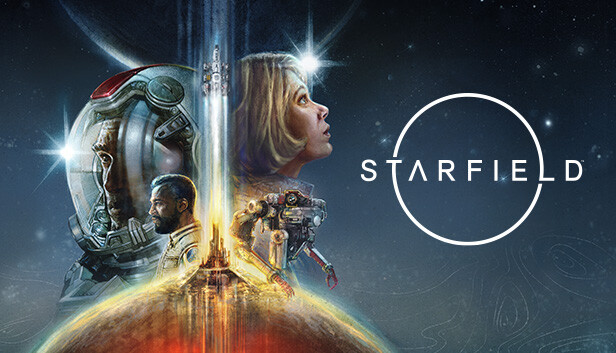
Oh boy, this one is going to be hard. When it was first announced at E3 in 2018, I was ecstatic! A Bethesda game in space! I had recently gotten into Bethesda and their games. My first experience was Fallout 4, and then Skyrim. I loved both of those games for different reasons. I loved the gameplay, the shooting, and settlement building in Fallout 4 and I love the world building and questlines in Skyrim. With these amazing gaming elements mixed into my favorite genre of entertainment, space opera, it’s a perfect combination. Over the long wait, my excitement kept building and building. I loved what I saw in the advertising and the showcases. Ship building, space combat, pirates, and a mystery plot line. I never got into Bethesda games for the exploration, but for the quests, the loot, and the gameplay loop, so when doubts began to rise up about that aspect, I ignored it. When Microsoft bought Bethesda, my hopes went up because I thought strong quality control and oversight would follow. Little did I know it didn’t matter that much. My initial impressions were good, but the more I played, the more I realized that Starfield became the biggest disappointment of the year.
Starfield is a science fiction open world RPG developed and published by Bethesda Studios. It is the first new IP for Bethesda in over twenty years and the first publication under Microsoft’s oversight. The game follows a player created character when they find a strange artifact and join the ranks of Constellation, the last group of space explorers. I played the game for 60 hours on PC.
Game reviews done in my style are organized into five categories, with each being graded on a scale from one to five. At the end of the review, all the categories will be summed up to determine the game’s letter grade. The five review categories include: gameplay, story and characters, visuals, soundtrack and sound design, and quality of life. Gameplay is game and level design, the quality of the combat, traversal mechanics, and skill tress. Story and characters judge the narrative and character development. Visuals discusses the quality of the graphics and art direction. Soundtrack and sound design look at the original score, sounds, and voice acting that fills the world. Finally, quality of life grades the game on user interface and game stability.
Gameplay
Starfield’s gameplay loop follows the same formula that all Bethesda games have followed for the last couple of games. Player finds a quest, goes to the location, either kill, negotiate or find a person or item, and then return to the quest giver. While doing this loop, the player can explore a dungeon and pick up valuable loot. Maybe find a piece of lore and have a fun fight. Repeat this multiple times with different motivations/storylines and you have a Bethesda game. I don’t play a Bethesda game for something innovative; I know what I get myself into, I play a Bethesda title for the immersive experience. Now while the main gameplay loop isn’t broken in Starfield, everything surrounding it is faulty.
Let’s tackle the first major problem: space travel. Here is how it works; you enter your ship and sit at the pilot seat, then you press a button, cutscene, now in space you then open the menu and navigate to the astral charts section and select where you want to go, cutscene, you arrive at your location and then choose a landing spot, cutscene and then you are free to move about the cabin. That’s it. At first glance it may appear to be another system that doesn’t quite work, but the problem that it causes is that it breaks up the open world aspect of the game. In reality, Starfield is a segmented regional game. Each landscape and world has a boundary where the only way to cross the border is through a cutscene or fast travel. It is busy work that isn’t necessary. This is 2023, and No Man’s Sky achieved seamless passage from space and planets years ago, so a triple A company like Bethesda should be able to achieve the same thing. This was an intentional choice.
Next is the randomized content; the generated planets and features. They are bland and empty. My first ten hours saw me travel to every world in a system and I immediately regretted doing it. Each planet has biomes with different resources and locations to travel to. But once you reach the edge of the biome, because there is one, the only way to keep exploring is to return to your ship, go through the cutscene nonsense again only to land at a different spot. Now the stuff that fills these biomes are features like caves, research stations, mining outposts, etc. All of their structures are the same. All the stations and caves have the same aesthetics. The stations I find have no enemies, no NPCs, nor any loot. All I find is an empty tent, a few resources to mine, and maybe a funky plant to scan. The thousands of planets that Todd Howard promised are nothing more than empty husks. The only content worth exploring is the premade and planned content for quests. I found that it wasn’t worth the tedious and unfun effort.
Those are the biggest design problems but there are more. Outpost building doesn’t have the same feel to it. In Fallout 4, settlement building has the purpose of making a town for people to live in and brings a certain life to them. In Starfield, outposts are nothing more than corporate holdings to only mine resources. The only people that can live there are employees that you buy. Outpost building feels like a tacked-on aspect that wasn’t given the right amount of development time. Now what can you use those resources for? Research and building mods for weapons and armor, or you can sell them for money. Speaking of weapon mods let’s talk about those. Starfield requires the player to research the mod and then build it. Both require resources that can be mined or bought. For comparison let’s look at Fallout 4, all you need to do in that game is to have the appropriate skill and the rank in it to be able to craft the mod you want. Resources for building were much fewer and easier to find. What Starfield does is cover the costs for modding your equipment to add to the grind. More busy work for the player. Starfield has too many resources; so many in fact it confused me on what I needed for crafting what I wanted and what I could sell. A simple fix would be to divide all the resources between utility and luxury resources. On top of all of this, I wanted to be able to have a fleet of ships crewed by my companions as they carry out freight missions for me and provide passive income. Can’t do that in Starfield. The player is allowed one active ship and all of your cargo and crew transfer back and forth, this makes buying new companions pointless as the player can get by on the companions the game naturally gives them.
I talked a lot about the cons, but what are the positives here? Well combat is a strong suit of the game, both on the ground and in space. Bethesda has come a long way in making their gunplay to be as smooth as it is in Starfield. Weapon variety is a plus, plenty of options to choose how you kill your enemy. The boost pack adds a lot to the movement to game, both in and out of combat. Varieties in gravity add a new element that was enjoyable when used. The minigames for persuasion and lockpicking are a welcome change from the normal minigames from previous Bethesda titles. Finally, the ship builder, though complicated, allowed the player to customize the best element of the game. Many praise the character creator, but for me it is passable. I do enjoy the ideas around traits and classes though I wish they were used more.
Starfield’s gameplay score is a 2.5/5.
Story
The main story of Starfield follows a promising premise. Your character finds a strange artifact, and by touching it you get a weird vision. Screams back to Mass Effect, so it was promising. I went in expecting aliens or maybe some strange cult of beings that will act as the main antagonist of the plot, like the Dragons in Skyrim or the Institute for Fallout 4. You are then pipelined into joining Constellation, a group dedicated to exploration. Now I have a problem with this. I don’t want to be forced to join a faction that is key for the main plot to advance. Bethesda forces the player to become a part of the Minutemen in Fallout 4, however the player isn’t forced to do anything for them after the tutorial missions are complete, but here in Starfield that faction follows you around like a bad stink. Of the five factions it was the least interesting to me, I’d rather have the option to select the faction to back me in the effort to collect the artifacts. It would then bring up an interesting dynamic between the joinable nations. But instead, the search for the artifacts became a hunt for knowledge and discovery that in itself isn’t a bad thing. From joining Constellation, you go on a series of quests to find the remaining artifacts. Some are done in a fun way, robbing it from a scavenger, negotiating from a crime lord, or recovering one from a research station after it ruptured an anomaly. That last one is my favorite. However, the majority of the artifacts are mined from a random spot in a cave just like the first one. Occasionally there is a group of enemies like Spacers or Pirates, but it is all copy and paste.
At a certain point, the questline introduces a power system like the shouts from Skyrim. After touching enough artifacts, the player produces energy that can be controlled into Star Powers. The way to activate them is to go to a strange alien temple and float through rings of light a couple times and that is it. It is the same for every single temple! Just more lazy design. Afterwards you encounter a strange ship that hails you. They are the Starborn. They warn you against collecting the artifacts, the plot ignores those threats of course and then the Starborn attack Constellation and kill one of your companions. Apparently the Starborn are multidimensional travelers of some of your companion that died and other characters. They are individuals that transcend the so-called Unity that grants the ability to travel to another reality. Two of the Starborn, the Emissary and the Hunter, are the main Starborn that you deal with and talk to. Both have different ways of viewing the Artifacts, one on controlling who gets to access it and the other wanting all the power for themselves. But the way I see it the Starborn bring violence wherever they go. I wanted an option to end their escapades and destroy the artifacts, but there isn’t an option for that. The only thing close enough to what I would want to do is decline changing a new universe which I did. Good thing too because all it would do is restart the game for New Game Plus. That’s the ending. Starting the game all over again. One of the laziest writing jobs that I have seen from Bethesda.
That is the main problem with Starfield’s missions. They all seem to be too linear. Very little options. The following mission is the perfect representation of the problem. Loose Ends is a side mission that takes place on Neon where you watch a drug smuggler get arrested. Now the quest directs you to the smuggler’s boss and makes you work with him in order to complete it. Why isn’t there an option for me to take down his organization, especially if I’m playing a Freestar Ranger character? That is the problem with these quests. Outside of not doing them, there aren’t multiple ways for a quest to end. Only one. Some of the ideas are poor too. Want to deliver flyers to promote a business? Want to apply for a job and go through the whole process only to go around government regulations? Like what are we doing here? My disappointment is matched in the quest the Heart of Mars. The quest giver makes it sound like a dangerous mission to seek out a valuable mineral deep in the core of Mars. Makes it sound mystical. Yet it is a hop, skip and jump from the damn city! No enemies, just mining with a laser tool! I will credit the faction quests though, because at least those are engaging. The UC Vanguard have you stop an alien threat and actually has good options at the end; the Freestar Rangers have you hunt down a group of mercenaries that are harassing farmers, basic both a fun Western concept; Ryujin has you complete corporate espionage; and you can either work to take down the Crimson Fleet or destroy them in the pirate questline. Once again, the faction quests are better than the main one.
So, how about companions? Well, there are only four to speak of really, the rest don’t have anything of note and all they do is give tiny stat boosts that befit only working on an outpost. All the companions are Constellation members; Sarah Morgan, Sam Coe, Barrett, and Andreja. These companions are frustrating to deal with, too set in their ways. The high road. All of them gave me a problem when I completed the UC Vangaurd questline and chose to save an endangered species that hunts the alien threat instead of an android that destroys the threat but might endanger people. I guess an organization hellbent on discovery wants to push androids over saving a species. Sam Coe has a conflict with his father that is never addressed again, outside of one quest and it doesn’t resolve it. Sarah Morgan at least gets closure and Andreja explores a faction that is basically ignored in game. House Va’runn and the Ecliptic Company are two interesting groups that lack any quest that might get one in the future DLCs. What a joke.
Starfield’s story score is a 1.5/5.
Visuals
To say that Starfield’s visuals are outdated is an understatement. The Creation Engine that was stretched to its limits in Fallouts 4 and 76 makes it return and even though there is some improvement, the graphics are mid at best. Now what I will give credit to is the art direction. The whole NASA-punk aesthetic is a nice surprise. It kind of reminds me of Alien in some way, yet it isn’t as dirty. I also like how each faction has their own ship and weapon style. The UC use sleek and efficient as their style, while the Freestar Collective host a rugged Western look. Where the visuals fail is in distance rendering and scenery. I can’t tell you how many times I landed on a planet and the horizon is pixelated and ugly. So much grey and very little color, it isn’t appealing. As for the scenery, I quickly got tired of the random plants that spawned, the ugly animals and the constantly reused resource nodes. It is the same for each planet.
Character models are basic and nothing to write home about. Facial animations are terrible. The term Starefield is a justified meme about the game because that is all that the characters seem to do stare with empty expressions. If some effort was put into the facial animations Starefield would go away, but the effort isn’t here. Clothing and armor either look amazing or absolutely terrible. Now Bethesda isn’t known for their graphics and probably never will be, but the flaws that are present are glaring.
Starfield’s visuals score is a 3/5.
Sound Design
Now I know space is supposed to be filled with silence, but this is a video game taking place in a futuristic society, you can have some good music. The soundtrack is just like the game they are in; bland. It feels as if they took the music from Fallout and gave them a space opera twist. What this game needs are a radio system like Fallout where the player can have music on while they explore the emptiness of space. Starfield’s soundtrack just lacks the epic music of Skyrim, and it just makes the experience worse.
Now how about the voice acting? It isn’t as bad. Cissy Jones, who voices Andreja, who is by default the best companion in the game, does her best with what is given to her. There are some familiar voices returning from prior titles, but in general the voice acting isn’t anything to praise or deem terrible. It does just enough.
Starfield’s sound design score is a 2/5.
Quality of Life
Bethesda is known for bugs. Clipping, t-posing, the works. Now where Starfield fails is in its quality for me. The only real bug I encountered is the hilarious amount of rag dolling for enemies, which doesn’t bother me as they are funny enough to be amusing. No, the real problem is the absolutely terrible optimization of the game. The amount of stuttering, freezes, sound and voice delay is unmeasurable. It made the experience of playing this game frustrating. Now before you go off and tell me that my rig probably couldn’t handle it, I’ve got an AMD Ryzen 7 with 32 GB of RAM and a NVIDIA 3070, these specs are enough to run any modern game. It ran Modern Warfare 3 just fine, so why can’t it run Starfield, a graphically inferior game? One word. Optimization. The only time where the game runs smoothly is in dungeons or predesigned areas. The randomly generated content that Starfield triumphally proclaims to be its best feature ruins the experience because it hurts the performance of the game. The UI of the game is fine, once again just like the voice acting, it gets the job done. As for the $70 price tag, Starfield is definitely not worth that much. $30 is more appropriate. That change in what is charged and what is worth is Starfield in a nutshell.
Starfield’s quality of life is a 1/5.
Final Verdict
I can’t state how much I wanted this game to be good. I put up with 60 hours of stuttering, terrible and outdated graphics and only the occasional high of fun gameplay in hopes that my patience of over five years would be rewarded. It just wasn’t. Starfield isn’t a bad game because of the mechanics or bones of the game, Starfield is a bad game because it is boring. There isn’t any soul in it. Although technically this is a better game than Fallout 76, not much about the company changed. This may have marked the end of what Bethesda is famous for and it’s a tragedy for the gaming community to lose one of its giants. The flaws in gameplay, boring sound design, terrible quality of life, and outdated visuals total into a terrible game.
The final score for Starfield is a 10/25 or a F. The biggest disappointment of the year.
 Nerdcrash!