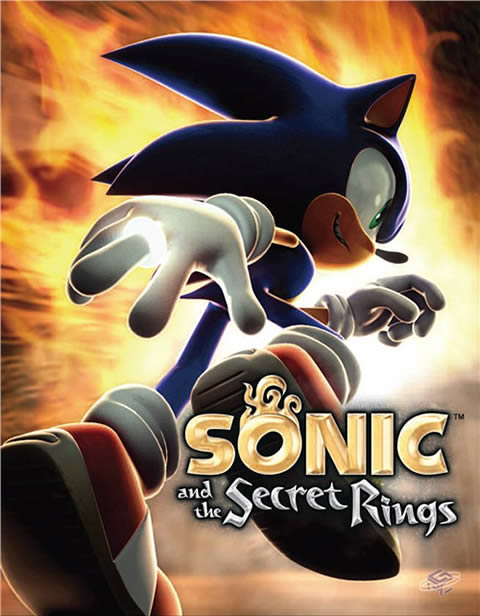
As previously mentioned, Sonic 06 doesn’t end at Sonic 06 for the Xbox 360. There was also a Wii port, with one major issue: split development time and different hardware meant that this game wouldn’t actually be possible on the Wii before the release date. Seeing the problem, Sega did the sensible thing and canceled the port. That was a lie. They actually decided to turn the port into a completely different game, which is how we got Sonic and the Secret Rings.
Secret Rings was an auto-runner; the game revolved around the idea that Sonic physically couldn’t stop moving, turning the game into a series of obstacle courses that lacked exploration and were more about dodging obstacles and enemies until you got to the end, with little control over your speed. There were a few levels involving such a mechanic in Sonic 06, so these were presumably expanded into the full game when the concept of a port fell through. Similarly, the game was given a new plot, which was mostly just an excuse to justify why Sonic couldn’t stop this time, but it also created a new label for the franchise in the Sonic Storybook Series. The idea was that each game in this subseries would involve Sonic being transported into the world of classic literature and experiencing his own version of the book’s plot, with the storybook characters being alternate versions of characters from his own series. Secret Rings modeled itself after 1001 Arabian Nights, which could have been a series in and of itself. While the ideas leading into this game were intriguing, and the soundtrack was masterful as usual, the game met horrific reception. Not only was it a step back from the promise of an 06 port, something people had hoped would correct the flaws of the first release, but the game was short, far too short to justify its $50 price tag. All this turned people off even before they realized the gameplay was pulling entirely from the most maligned levels of 06 and, due to a mission-based structure, would require the player to regularly backtrack while playing a game where the character physically cannot stop running forward. The barely functional series of backflipping maneuvers necessary to accomplish this, and the painful level structure, guaranteed that nobody was happy with this game even if they could get past the rough advertising. Considering the fact that the game was the first original Sonic title on a Nintendo console ever (we’re not counting handhelds at the moment), and that this came hot off the heels of 06’s disaster, and it’s no wonder the series developed such a bad reputation at this time.
Still, the storybook idea was good enough to give a second chance to, and two years later, we saw Sonic and the Black Knight, which replaced the Arabian Nights setting with King Arthur. This game is strange to talk about for many reasons, not the least of which is its bizarre reputation as the strongest story in a series known primarily for its gameplay. Personally, I kind of agree with the reputation; it’s not necessarily the best story in the series, but it is up there, and it features probably the best writing for Sonic himself in the franchise, taking his theme song (which always designated him as chaotic neutral rather than heroic) to heart. The gameplay on the other hand, retained the auto-runner style of Secret Rings, with dramatically improved level design and the near total removal of the backtracking missions. The thing the gameplay is most remembered for, however, was sticking a sword in Sonic’s hands. The swordplay while on the run was an interesting gimmick that worked with the Wii’s motion controls, and as a whole, I’d call the gameplay… average. It’s nothing mind-blowing, and there are some annoying bits where you’re fighting with the control scheme, but it works much better in practice than it sounds on paper and produced a game that, contrary to 06 and Secret Rings, was perfectly playable. Nevertheless, between the ridiculous concept, the already poor reception to the storybook series, a price tag too high for the meager amount of content, and the franchise’s then questionable reputation, the game sold poorly. So poorly in fact, that the storybook series was canceled outright, with the concept never being revisited. It’s a shame that Sega put so much effort into this new branding only to give up on the concept after two games, but they couldn’t have gotten off to a worse start with it.
In addition to ending the subseries, Sonic and the Black Knight would be the end of another integral aspect of the franchise. Its credits theme would be the last time fans would hear Crush 40, the band that had given life to the franchise’s famous lyrical themes, since Sonic Adventure. It would also be the last title to feature the character specific theme songs the Adventure games produced, and which had defined the characters up to this point. While most of the cast had reached their logical narrative conclusions in 06 (or had all progress frustratingly reset in the case of Tails), many of Sonic’s friends would make less frequent appearances in the main series from this point onward, and those who did appear seemed to be at a loss for characterization, given that the writers were uncertain of how to advance their cast at this point. I know it’s absurd to link the decline in writing with the removal of songs that had been getting reused for the better part of a decade, but when each song had served as a guiding principle for that character’s arc, it becomes apparent that nothing new had been planned for many of them.
While I’ve been focusing on the storybook games, there was another Sonic title released in between: Sonic Unleashed. You know, that one were Sonic gets turned into the… Were-hog (side note, the were-prefix in werewolf means man, so etymologically speaking, this should have turned Sonic into a horrific half-human hybrid, so thank god that nobody at Sega bothered to check what their own terminology meant). The game was a new entry in the main series and was cleanly split between its daytime and nighttime stages. Daytime stages were standard 3D Sonic fare, and reintroduced the Boost system from Sonic Rush, wherein a tap of the button instantly accelerated Sonic to his top speed so long as you maintained a correlated meter. Nighttime stages were for the werehog, and played as a 3D beat-em-up action game. As a little minigame, the werehog and its stretchy limbs would have been find, but as more than half the game, it became incredibly grating and repetitive, in addition to being another random gimmick that took away from the gameplay people expected from the series. This stood out more than ever here, as popular reception to the daytime stages was absolutely fantastic. Fans loved the new style of Sonic levels, which translated the gameplay style of the 2D titles into the 3D design space while maintaining the fantastical setpieces the series had become known for. Reception to these levels was so warm, in fact, that the franchise would structure future titles (barring the aforementioned Black Knight) around this system, finally providing the foundation for the series to rebuild itself. The game saw some truly mixed reviews due to effectively being half of a good game stapled onto half of a bad game, but Sega walked away from this with a better understanding of how to move the series in a new direction.
The one casualty of this was the rest of the cast. After complaints about too many playable characters who weren’t Sonic in past games, Unleashed stripped the playable roster down to just Sonic, and removed most of the Adventure-era cast from the story altogether. We would see this reduction as a rough template for the series going forward, with most of the mainline titles relying strictly on the Genesis-era characters (Sonic, Tails, Amy, Knuckles, Robotnik, Metal Sonic), new one-off characters like Unleashed’s Chip, and the odd appearance of Shadow, Blaze, or Rouge, who were seemingly the only post-Genesis character Sega was confident enough to bring back on occasion. This decision has become a sore spot for fans in recent years, as the differing gameplay styles the larger cast introduced would all be excised in favor of just focusing on Sonic’s gameplay. And while I’m all for narrowing your scope and producing a focused title, it was about to be a difficult time for anyone who didn’t enjoy the Boost gameplay enough to fill a whole game.
The upside, however, was that the series was about to experience a definitively good game again. After the disaster of 06 and the experiments of Unleashed and the Storybook, fans were given Sonic Colors. While it still had its gimmicks in the Wisp system, Colors stripped everything else down to create a more polished version of Unleashed’s daytime stages and made an entire game of them. I skipped out on this game due to the series’ reputation at the time, so there’s not as much for me to say as I would like, but the game finally stabilized the series in a way that fans could be happy with. Fans and critics alike agreed that Colors was just a good platformer with some fun space gimmicks, and Sega breathed a sigh of relief after finally giving their flagship series another beloved title. Those of you who recall the explanations of the Sonic Cycle in previous articles will recognize our position in the cycle at this point. After 06 was a low point and we experimented a bit, we’ve hit a good game, the Adventure, if you will. Next up, if the cycle holds, we’ll see an even better sequel, the Adventure 2. And if that pattern holds, then that means the follow-up title will be a little too experimental for its own good but still benefit on recreated good will for the series. And that is exactly what is about to happen.
But before anything else can go downhill, Sonic gets to have one more excellent game. And he’s going to spend it celebrating his franchise for his own anniversary…
 Nerdcrash!