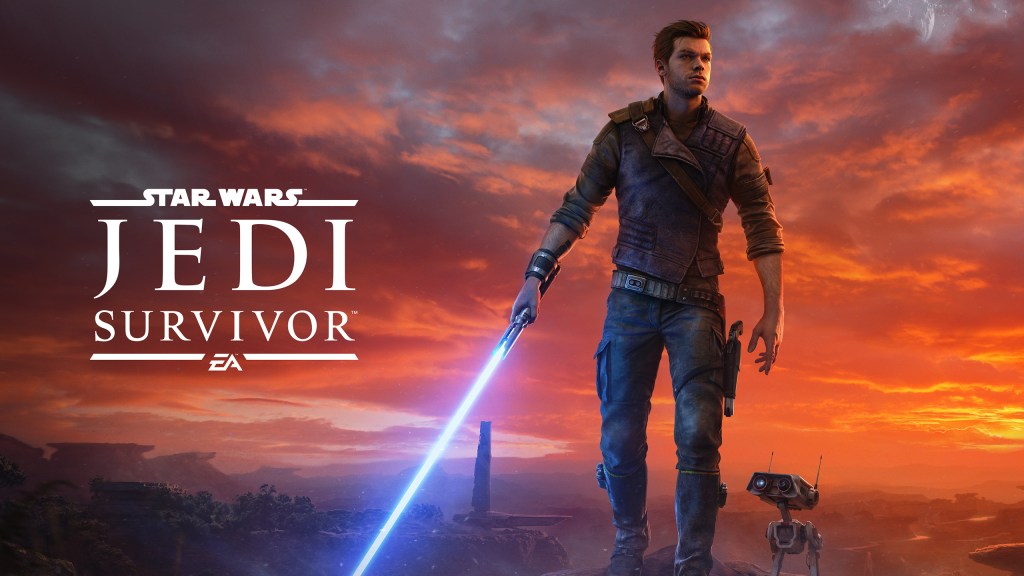
Star Wars is one of the biggest franchises of all time, an intellectual property that stretches to movies, TV shows, cartoons, books, and of course video games. Some of the best video games of all time are linked to Star Wars with the likes of the Battlefront 2 (2005) and Knights of the Old Republic. But when EA took over the exclusive license to make Star Wars games, it was like the Dark Side had fallen over the fanbase. Terrible and controversial remakes of the Battlefront series had left a bad taste in gamers’ mouths. Then in 2019 things changed. EA put out a solid single player Star Wars experience. Star Wars Jedi: Fallen Order restored hope that the franchise can still be delivered with quality to the video game medium.
Star Wars Jedi: Survivor is the direct sequel to Fallen Order. Developed by Respawn Entertainment and published by Electronic Arts, Jedi: Survivor is an action-adventure game that follows the events of its predecessor in the time of the Empire in the Star Wars universe. I played the game on PC on normal difficulty. My playthrough lasted about 20 hours.
Game reviews done in my style are organized into five categories, with each being graded on a scale from one to five. At the end of the review, all the categories will be summed up to determine the game’s letter grade. The five review categories include: gameplay, story and characters, visuals, soundtrack and sound design and quality of life. Gameplay is game and level design, the quality of the combat, traversal mechanics and skill tress. Story and characters judge the narrative and character development. Visuals discusses the quality of the graphics and art direction. Soundtrack and sound design looks at the original score, sounds and ambient music that fills the world with sound. Finally, quality of life grades the game on user interface and game stability.
Gameplay
Much of the solid gameplay from Fallen Order is carried over to the sequel. The core focus of the combat revolves around lightsaber combat, parrying enemy attacks and using force powers to control the flow of battle. Meanwhile outside of combat, the focus is on map traversal. Climbing cliffs, double jumping over chasms and using the force to interact with the world to get around obstacles were the main features from the first game. For combat, Jedi Survivor adds stances. There are five total, each with a different strategy and feel. The two I used were dual wield, a high speed combo attacking stance with the ability to throw your lightsabers, and the blaster stance, a balanced combination between ranged and close quarters with each swing feeling measured like a fencing saber. Map traversal adds a midair dash and a grappling hook. This added to the climbing and wall riding already present, allows for a fun montage of stringing together parkouring feats that only a Jedi could pull-off.
Jedi: Survivor also adds a perk system that includes abilities such as reduced Force power costs or steady regeneration during combat. The skill tress return, with each stance getting their own skill tree along with enhancing your force powers and survivability. Some trees grant new moves or powers, while others provide increased health. Story missions is the main content in the game however Survivor adds in rumors and bounties to add more content. Rumors are explorable areas on the map that provide unlocks for character cosmetics and base upgrades. Bounties is a side quest type that has you hunt down a bounty hunter, defeat him in a mini boss fight and claim his unique currency type. All the currency types found throughout the game are used to purchase perks and cosmetics.
Jedi: Survivor’s strength is in its combat. It is where the game’s polish is at its strongest and where the game is the most enjoyable. Once I found which stances best suited my playstyle, I enjoyed slicing apart Stormtroopers and droids. As for map traversal, for the most part it is enjoyable, however I encountered multiple occasions where invisible walls prevent the completion of the parkour sections in the game. These invisible walls interrupt the experience and take agency away from the player. I grew frustrated with these sections of the game. The additional content I didn’t really enjoy and decided to avoid in the later stages of the game. The presence of perks was nigh unnoticeable and not worth the effort of hunting down currency to purchase from vendors. As for cosmetics, I found a look for Cal I enjoyed early in the game and opted out of the side content mostly because they add nothing to the game. Now if you are a completionist, you will enjoy the bonus bosses and hidden areas that are present in the game, but it wasn’t for me.
I also found that Jedi: Survivor at normal difficulty was significantly easier than the first title. I played both games on normal so I could experience the game in a controlled environment, so it was a difficulty selection. It comes down to enemy variety. Many of the enemies are easy and only a threat in mob encounters where there are ten coming at the player at once. In the first game, Purge Troopers were mini bosses onto themselves and every time I saw one my heart dropped in fear of what they can do. In Survivor, they are near absent and barely show up, on top of being easier to kill. As for the boss fights, the final boss only took me five tries, with few other bosses causing me problems. These fights also became more cinematic in nature rather than being based on player actions. If the developers wanted to create an easier experience to match Cal’s rising power, then that is a clever idea, but until a dev comes out to speak that was their intent, it’ll remain only a theory.
Star Wars Jedi: Survivor’s gameplay score is a 3.5/5.
Story
Jedi: Survivor once again follows Order 66 survivor Cal Kestis. Some time has passed since the conclusion of the events of Fallen Order. Cal and his droid companion BD-1 have joined forces with rebel leader Saw Gerrera to help bring the fight to the Empire. The opening level takes place on Coruscant, with Cal captured and being brough to an Imperial senator with crucial military information. The capture, however, was a ruse to allow Cal and his team of rebels to capture the information. During the course of the mission Cal’s team is slowly killed off until only newcomer Bode remains. Needing to repair his ship, the Mantis, Cal travels to Koboh on the Outer Rim to reunite with Greez, the pilot of the Mantis from last game. While on planet Cal discovers ruins dating back to the High Republic era and encounters a droid, ZN-AA. Cal helps the droid find repairs and learns of the existence of a hidden planet behind an abyss near Koboh, the mythical planet of Tanalorr.
The story then evolves into a quest led by Cal to bring his loved ones and those hunted by the Empire to the safety of Tanalorr. This quest brings about more reunions with cast members from the last game, Jedi Master Cere and Cal’s budding love interest, the Night Sister Merrin. But also new enemies such as a group of raiders with remnants of a droid army and led by fallen Jedi Dagan Gera and his Rashade follower Rayvis. The story becomes a race against the forces of Dagan to see who reaches Tanalorr first until the eventual confrontation between Cal and Dagan. But after that fight, Cal is betrayed by Bode who steals the compass to the planet and alerts the Empire to the location of Jedi and the refugees they are protecting. The story concludes with Cal hunting down Bode and giving into the Dark side to defeat his former friend with the final scene of a Jedi funeral with Cal and the friends that survived saying goodbye to Bode and Cere.
In my opinion, the story of Star Wars Jedi: Survivor is a perfect example of a strong start but falls flat at the end. The story in many ways is a rehash of the previous game, Cal stumbling upon an old Jedi artifact or location that will help him survive from the Empire. The story builds Dagan Gera as the main villain and the game should’ve ended with him being the final boss. The betrayal of Bode seemed forced to me and making him a Jedi was unnecessary for his role. A bounty hunter or freelancer seemed more intriguing than yet another Fallen Jedi. It also didn’t help that the game had less planets to explore. The majority of the game is spent on Koboh, Koboh’s moon that isn’t even given a name, and Jetta. Coruscant and an Imperial base are minor locations, with Tanalorr being the location that is built up over the entire game only hosting the final fight is a letdown.
Where Jedi: Survivor’s writing is strong is with the characters and how they interact. Cal, the protagonist, struggles with the guilt of being a survivor of a purge of his religion and constantly wrestles with the Dark side that is lingering around his actions. His development matches the theme of the game of holding onto to your loved ones to get through depression while also speaking to guilt and hope. The use of Tanalorr as the solution within reach to his mental depression is evident. Cal’s relations with BD-1 and Merrin are on full display as the budding romance between Cal and Merrin fully blossoms, with BD-1 being a complete joy. There are also many cool moments in the game. Particularly when the game fakes out Cal’s death as you play as Cere during the Imperial assault that leads to her death at the hands of Darth Vader. The opening on Coruscant is also a highlight as it provided a fun opening to the game. Overall, Jedi: Survivor’s writing is flawed, but shines with certain moments.
Star Wars Jedi: Survivor’s story score is a 3/5.
Visuals
When it comes to visuals, Star Wars Jedi: Survivors performs on two different scales. The positives are that the environmental visuals are very strong. The scenery is gorgeous. I was shocked at how well Coruscant looked, and the seedy underbelly feel the level had. Imperial bases had the sleek efficiency well represented, while your outpost base on Koboh feels properly rugged yet homely. Character design and effects are also a strength of the art style. All of the different outfits for Cal, at least the ones I encountered, had a great feel to them. Environmental effects on armor, like desert dust and wet clothes are present as well. I should also note that the brutal savage lightsaber damage caused by your swings is visually represent and permanent on common enemies. The arm you cut off a Stormtrooper sits on the ground after combat. The last positive is that the rendering and the render distance is impressive. The Stormtrooper that I Force Pushed down a ravine, stayed dead down there until I forced his respawn by meditating.
The graphical performance of the game is a different story. For the most part it holds, but there are moments of frame drops and armor/clothing clipping. Not to mention certain moments where character models are a bit too blocky around the edges. The performance isn’t a complete hinderance, but it should be noted.
Star Wars Jedi: Survivor’s graphic score is a 3.5/5.
Soundtrack and Sound Design
There isn’t much to say about the soundtrack. Most of the tracks are adaptations of classic Star Wars themes and tunes, with some returning music from the first game. There wasn’t really any unique music introduced in the game. Sound design through ambience is standard fare, but the quality of all of the sound is good. Where Survivor shines though is in the vocal performances. Cameron Monaghan, Debra Wilson and Tina Ivlev all gave life to their characters to make them realistic and give them such emotional value. We also have strong banter and side conversations from enemies and side characters. They brought in the voice actor who voiced the Battle Droids from the Clone Wars cartoons and gave him the funniest lines in the game. Yes, I’m talking about the droid standing guard on the cliff. Although there are some reused lines from time to time, the presence of the banter, taunts, and vocal cues of the enemies give them that much more life.
Star Wars Jedi: Survivor’s soundtrack and sound design score is a 3.5/5.
Quality of Life
Now I purchased and played Jedi: Survivor in July, nearly two full months since the game came out. Jedi: Survivor released with some optimization and performance issues on PC. When I played the game and compared it to the launch quality there was a difference, but this just applies to the graphical performance. Not the story or the gameplay. Hud and UI I had no issues with. And even though the game suggests it should be played with a controller, I managed just fine on keyboard. I experienced one crash, but it wasn’t game breaking, just a standard application freeze. However, my main critique to the quality of life is that this game is not worth $70! I got this during the Steam Summer Sale for $55 and that is a much more fair price with the content that I received. So, some points will be taken away due to that.
Star Wars Jedi: Survivor’s quality of life score is a 4/5.
Final Verdict
Star Wars Jedi: Survivor is an enjoyable, yet flawed game. I have problems with the story and there are gameplay elements that I just ignored due to lack of interest. Yet as a Star Wars fan I enjoyed myself. If this series is going to have a third game, what I want is just to focus on the combat and traversal, ditch the rumors, the perks, and the stores, for they aren’t needed. If you are a Star Wars fan then I suggest you pick this up because the experience is enjoyable, just wait for a sale to get a bang for your buck.
The final score for Star War Jedi: Survivor is a 17.5/25 or a C grade.
 Nerdcrash!