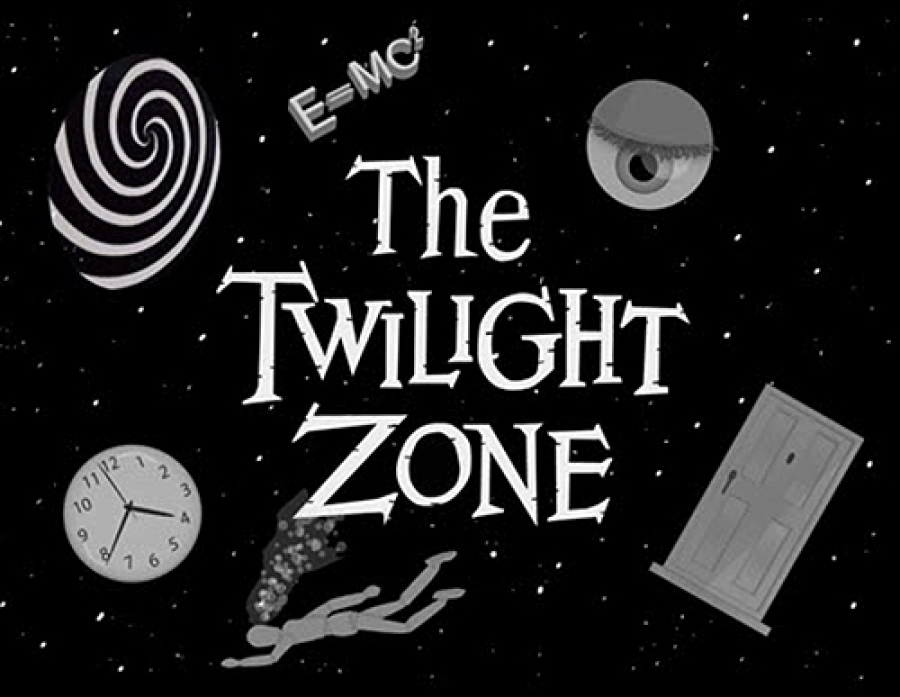
As one of the shows that has stood the test of time, everybody in the US remembers this bizarre horror-sci-fi-thriller show, especially because the scripts for a few episodes are included in English textbooks as a means of teaching students how to read scripts. The series ran for five seasons, with three revivals and an oft mocked movie following its wake. While Rod Serling’s original vision for the show was incredibly fresh and unique at the time of its creation, many of these plots have been referenced and parodied by other works over the years. Some works age much better than others, and in an anthology series like this one, there is some serious quality variance from episode to episode. For those unaware, anthology series means that each episode is a standalone story with characters and a setting unique to that episode. There are a few recurrent elements, one or two characters get second appearances, and the revivals would grant direct sequels to select episodes, but you can pick out any given episode without missing any context. The only truly consistent character is Serling, who narrates the start and end of each episode.
As the original series is probably my favorite live action TV series, I’ve recently decided to sit down and watch through the entire thing, something I’ve admittedly never done before. This article series, which will be updated on a basis of “when I get through it” will be a season by season discussion of the show, detailing every episode as I revisit all 156 stories. Some will include spoilers (seriously guys, its 60 years old, the spoiler embargo is up) and some will not, depending on how much I want to protect the twist and how likely it is that you already know how things end as a result of pop culture osmosis. For today though, we’ll just be looking at the very first season. There’s a lot of good here even today, and if you’ve never seen anything beyond the handful of episodes they show in middle school, consider giving these a look. There’s a good mix of social commentary that resonates today and genuinely well-done horror. And a handful of stinkers.
And no, this is not a sign of how long our articles will be in the future. I’m probably not writing anything this long for Nerdcrash again once this five article series is done.
So without further ado, let’s talk about these episodes. All 36 episodes of the first season.
S1E1 – Where is Everybody
The first episode of a series is always a difficult one to make. You have to communicate exactly what your show is going to be right off the bat, because advertising will only do so much on its own. For its debut, The Twilight Zone gives us the story of an amnesiac that wanders into a seemingly empty town. The eeriness is created almost entirely through the framing of the camera, focusing solely on the protagonist as he searches through the town in static shots where not even the camera will move as his companion. The longer it goes, the more you start to feel the character’s unease, as your eyes lock onto every hint of movement in the backgrounds, and you become more and more certain that somebody is, or was, just in the room with him, just barely out of view. This is a great display of growing unease as our protagonist grows increasingly more distraught by the lack of people, with the mirror scenes acting as the highlight, in just how off seeing a reflection begins to feel when you only expect one person to exist. When the tension finally breaks and you are given an explanation for the episode, I do find the answer to be on the weaker side, but it does an excellent job at establishing the science fiction half of the show, after an episode consisting solely of mounting dread and unease. As an examination of isolation’s effects on a man, this does a serviceable job in the twenty minutes it has to work with. As an introduction to what The Twilight Zone is, I think this is perfect. Not an episode I think I would revisit often, but it hits all the essentials of being what a first episode should be.
Also I know it was ‘59, and that 90% of the story is a one-man show, but it’s a bold move to open your series with an episode that doesn’t have any women in it.
S1E2 – One for the Angels
This episode introduces us to Mr. Death, who will reappear in another two or three episodes, including my beloved Nothing in the Dark. He’s much more businessy here, perhaps to match his appointment, as he comes early to inform an aging salesman that he’ll be passing in his sleep tonight. When the salesman negotiates a life extension, just long enough to make the perfect pitch (which he intends on delaying for obvious reasons), Death comments that he does have to take someone tonight, and the little girl next door falls ill. I think we all know where this plot is going, and the only thing I can’t tell is if Mr. Death is just putting on the theatrics to give the episode’s hero his moment, or if he actually falls for the distraction. My money’s on the former, but seeing him visibly sweat as he gets delayed does make me wonder. It’s a happy little story, ultimately resulting in the hero coming to terms and knowing he did something worth doing on his final day. Mr. Death will show up again later, and he won’t be nearly as no nonsense, nor as pseudo-antagonistic, as his initial portrayal here, and I can’t help but wonder if that stems from different writing goals a couple years down the line, or if it’s a conscious choice for him to match the temperament of the people he meets. Either way, this is a much more lighthearted story than the previous episode, focusing more on the good of the story than on the fear. And then those final lines, and the quick bit where the salesman grabs his briefcase before he passes on, hammer in a very human element that’s communicated well through very little time. That’s one of the things I respect so much about this show; it knows how long it has to tell each story and really fits in as much characterization as it can for these characters, because they matter, even if we won’t be seeing most of them outside the one story. Where is Everybody was quite good at that too.
S1E3 – Mr. Denton on Doomsday
This episode marks both the show’s first woman, and its first period piece. While most episodes are either set in the modern day (for its time), or in sci-fi futures of varying worth, there are several that take place in the wars of the 20th century or, as in this case, the wild west. The titular Mr. Denton is a drunken frontiersman who defeats his alcoholism with the power of gun violence, after a seemingly magic revolver is given to him by a traveling peddler, not so subtly named Mr. Fate. Denton immediately gets non-lethal revenge on those who treated him poorly and finds the confidence to kick his crippling alcoholism, but fears this will thrust him back into the cycle that led to it in the first place. He used to be known as the fastest gun in the west, but people kept coming to challenge him, in that old western trope, and the body count he unwillingly racked up is what brought him down in the first place. The episode features an interesting conclusion, where both Denton and his newest challenger are given potions by Mr. Fate to improve their reflexes, and each winds up with a broken hand after the shootout. Denton sees this as an absolute blessing, since he’ll never be able to shoot again, and his young challenger sees it as a curse. While The Twilight Zone was always known for being very direct in its morality and criticisms, this one leaves me wondering what exactly the message was. There’s certainly something to be said for nonviolence here, but given that shooting skills directly lead to the end of the protagonist’s alcoholism, I’m not so sure it works as well as intended, if that was the intention. This isn’t a bad episode per se, but it’s severely lacking in the things we most associate with the show, and ends on a strange note, though Serling assures us this is the ideal result for all parties involved.
S1E4 – 16 Millimeter Shrine
Our first female lead is Barbara, an aging actress who sits alone watching her own movies over and over instead of interacting with the world. This episode is a commentary on our fear of aging and of times changing. While Barbara has shut the world out in an attempt to pretend she still lives in her perfect 1930s, her maid and her agent make one last attempt to get her out and about again. Unwilling to accept an age appropriate role (a mother, in this case), she shuts herself in even more until the agent calls up her old costar in an attempt to shock her back to reality. The seen where they meet up and Barbara is shellshocked by how much her old flame has changed is still tough to watch, as it speaks to the fears inherent to all of us. Why must things change or get worse? Why must we age? Why must the new and unfamiliar overtake the world we know? The episode doesn’t have the answers to that question, just a reminder that it is our job as people to adapt to the changes. While the morale is much more straightforward than in Mr. Denton on Doomsday, it ends in a much more uncertain fashion, leaving it to the viewer’s imagination if Barbara’s final act with the film projector is truly magic, or just a metaphor for her death. This episode comes with strong performances and a topic that will engage people for as long as we are mortal, and it’s probably my favorite of this first batch.
S1E5 – Walking Distance
Walter’s car breaks down on his way to visit his hometown, so he walks the rest of the way. Returning for the first time in twenty years, he finds everything exactly the same, including the people. Just like the previous episode, this one is another discussion on nostalgia for the past. Unlike the previous episode, it focuses more on the yearning for better days gone by than on fear of the future, suggesting that Walter has time traveled purely through a desire to be a child again, before he felt trapped in a life he didn’t want. It’s a heartfelt message, and one that’s much more “we’re talking to the viewer here” than the other episodes so far, as Walter is forced to learn that he cannot go back, and that all he can do is make his current life one worth living, rather than chasing after the simpler life he once had. It’s strange, we’re often told to show and not tell when writing stories, but sometimes being as direct and sincere as this leads to the message hitting that much harder. I’m sure we can all think of a time in the past we’d like to return to, but we only get to have that time once, and that’s an honest fact of life, not a sad one. Walter’s conversation with his father on the carousel single handedly elevates this from a decent episode to an excellent one, and the time travel induced limp very directly establishes what good can come from chasing the past.
Also, to note an oddity, Serling gets a third narration segment in the middle of the episode, almost as if they were worried people would call the premise a bluff, as the bonus narration exists just to assure the viewer that Walter really did stumble backwards in time.
S1E6 – Escape Clause
A hypochondriac makes a deal with the devil for immortality. He then uses this in the most boring but practical way possible by getting into accidents and suing people, gets bored with the lack of risk, murders his wife for the thrill of the electric chair, and then gets sentenced to life in prison instead. It’s a straightforward and predictable story about mortality, but the most memorable part is easily the protagonist, who is far and away the most unpleasant of the characters we’ve followed thus far. At their worst, our protagonists have at least been sympathetic up to this point, but this guy (also named Walter, because a lot of the season 1 protagonists are) is such an unlikable ass that you can’t help but laugh at his misfortune in the end. Good for a little black comedy I suppose.
S1E7 – The Lonely
In a system that is both unnecessarily cruel and hopelessly inefficient. Solitary confinement is now performed by shipping people onto their own personal asteroid and delivering supplies every three months. Our young convict has his sentence slightly lessened after four years alone when the supplies include a ridiculously human robot in the shape of a woman. Despite initial concerns, he grows to love “Alicia” (who is the highlight of the episode with her superb acting). Another year passes, and he’s grown comfortable with his lot in life. So what will happen when activists bring an end to this style of punishment and he’s due to return to Earth, but can’t bring Alicia along? The episode devotes just enough time to the relationship between these two that we can believe it, and the protagonist sincerely forgetting that Alicia is a robot is both sweet and another reminder of humanity’s desperate need for companionship. We’ll revisit these ridiculously human robots again in future episodes, and while this is a serviceable introduction to them, I can’t help but feel the punishment system plotline takes too much time from any philosophical work that could be gleaned from Alicia. Hell, she doesn’t even show up until the second half of the episode!
S1E8 – Time Enough at Last
Hey! It’s one of those three they show you in middle school! Honestly, I didn’t realize how early into the show this one is. It’s the one where a bookworm is the only survivor of a nuclear blast; you know the one. It’s also an excellent case study in what a good performance can bring to a character, and why it is on both the writer and the actor to deliver. Cause let’s be frank here, if not for Meredith’s portrayal of the character Henry Beemis, I think we’d all hate this guy. Stripped dof the performance, and just looking at his lines, Beemis is far from sympathetic. He’s objectively bad at his job, directly because of the fact that he’s too busy trying to recommend people books to do it right, he accidentally sexually harasses a woman while trying to read the button on her blouse, is generally disrespectful to people’s faces, and gets over the deaths of everyone he knows with disturbing speed. Don’t get me wrong, he lives in some weird dystopia where everyone around him seems to hate the concept of reading for no adequately explained reason, and the people around him are just as bad for other reasons, but the guy is a misanthrope supreme who really does need to develop another personality trait and acknowledge the people around him. The biggest mystery of the episode is how he managed to get married to begin with. His wife’s terrible for putting him down, ripping up his books, and generally being the CEO of illiteracy, but if I was married to someone who physically couldn’t pull themself away from their reading long enough to have a conversation, I’d probably be upset with them too. Of course, Meredith puts on such a pathetic and likable performance that you end up ignoring all that and siding in his favor, so I’m left wondering if we were ever intended to like him or not. Judging by ust the script, I’d say no, but the director didn’t seem to think there was anything wrong with the performance we got, so it’s hard to say.
Oh right, the episode. I assume I don’t have to summarize this one since it’s mandatory viewing in public schools. It’s almost funny how over the top Mrs. Beemis is in her one scene where she rips up the poetry book, but the bank manager is frankly justified in his actions, since he’s getting customer complaints about this guy who won’t engage with the rest of his coworkers and is trying to give him a chance to work on himself. The tragedy of the conclusion is ultimately not that Beemis won’t be able to read at the miraculously intact library, but that he cheers for the fact that he’s all alone, only to immediately find himself in a situation where he needs the help of other people. The fact that he bothers calling for his wife after the bomb goes off is nice, but man I can’t get over how happy Beemis is to be the sole survivor. No attempt is made to leave town or contact another part of the country. It takes him just a short montage to decide he’d like to just gather up food and sit in the library for the rest of his life. His initial concerns are not that he’s the last man in town, but that there won’t be a new newspaper issue for him to read tomorrow. Granted, he eventually breaks down and starts searching for people, but once again, the fact that he’d rather die or sit in the ruins of the library than look outside of town confirms just how small of a world Beemis truly lives in. There is nothing besides his wife, job, and books. I want to give him some credit; I’m a bookish introvert too, but jesus christ man you can’t replace the entire world with that. Once again, if there was any sign that he wanted to confirm life outside of his town, which there probably would be, given that his town seems to have been ground zero for the explosion, I’d be more forgiving. But you’re going to sit here and cry that it’s not fair you won’t get to read when everyone you know is dead? He deserves the infamous twist.
For the second time, Serling has some mid-episode narration for us, basically covering a montage of Beemis searching the town in the wake of the bomb. It stops us from seeing Beemis react to certain things, which I once again have to question, as it is either intended to rob us of a chance to see Beemis in a sympathetic light, or to save us time for the Beemis’ breakdown. I sincerely have no idea how Serling intended for us to view this character, and I won’t criticize anybody who views him differently than I do, but this episode is one of those necessary reminders that the greatest resource available to a man is other people. Without them, all the time in the world is worthless to Henry Beemis.
S1E9 – Perchance to Dream
It took me until the episode’s climax to realize I actually had seen this one before. Ed is a man with an overactive imagination, and he’s stayed awake for four days because he believes he’ll die if he falls asleep, killed by a strange cat girl in a carnival he keeps dreaming of. I won’t spoil where exactly this goes, because I think it’s an interesting plot thread to follow to its conclusion naturally. With a pair of actors who are having just a bit too much fun in their roles, a very strange and dreamlike plotline, and a fabulous soundtrack, this one takes you for a bizarrely hypnotic ride as you try to make heads or tails of where the plot is going. Structured as a series of flashbacks Ed tells his psychiatrist, the dream-dwelling antagonist, who may or may not exist, gets closer and closer to her goal as Ed slowly loses his ability to stay awake. Or is Ed just letting his delusions get the best of him? This is where The Twilight Zone starts to feel like the pop culture perception of The Twilight Zone, with a very weird concept and a mind bending final sequence. The exposition heavy plot might not be the most engaging to some, and there is a definite sense that something is off for the full runtime, but I enjoy that kind of thing.
S1E10 – Judgement Night
According to Alfred Hitchcock, if you put a bomb under the table without telling the audience, you get a moment’s shock value, but if you put the bomb under the table and tell the audience it will blow in five minutes, then you get five minutes of dramatic tension. Hitchcock was right about this, but only if you care about the characters involved. From the very beginning of this episode, you know what is going to happen, and while there is a twist, it’s not one that changes the result of the plot. Lancer, in a bout of terrible overacting, is pretty much constantly saying how long it will be before a German U-boat sinks the ship he is on. He’s so caught up in this that we don’t get time to care about him or anybody else around him until it happens.
Serling fought in WWII, and the experiences he had there visibly color several episodes of this show. Supposedly the idea for The Twilight Zone came from nightmares he had about the war after returning. This is the first of several episodes set during the war, and the first of several to star a fictional nazi. These episodes can be quite good, as we’ll touch on later (He’s Alive, Death’s Head Revisited), but this one very much misses the mark. Whereas most of the nazi-centric episodes deal with reminders of how Germany took that road and how we can prevent it from repeating, this one aims to say… that the German soldiers experienced PTSD and/or felt guilty for their actions? I’m not denying that, but it rings hollow in an episode where the nazis show up, sink a passenger boat for no particular reason, and sail away in their submarine. Perhaps the episode is supposed to be scary in how it portrays the attack, but not only was this propaganda piece twenty years out of date when it aired, but it is so far removed from the modern day that it becomes difficult to care.
This is the weakest episode thus far, lacking tension, characters to care about, a logical moral, or even a proper bit of sci-fi or horror. At least setting the episode on the sea allowed the cameramen and set designers to have a bit of fun. The cinematography was top-notch for the era.
S1E11 – When the Sky Was Opened
A truly terrifying existentialist nightmare. Perhaps making this even scarier is that after watching the episode again, I still can’t tell you what the title refers to. Three air force men, Forbes, Harrington, and Gart, attempt a historic space flight to briefly orbit the Earth. They go off radar for a day, then crash land and miraculously survive. Gart gets a visit from Forbes, his sole copilot, in the hospital, and Forbes hysterically claims that there was a third man in that ship with them. So begins a nightmare in which the three men are slowly erased from the world by an unseen force, vanishing, along with their memory, and any proof they had ever existed. The newspaper reporting their survival slowly rewrites itself in each scene to say that less people were on it to begin with, minor things they changed in a room will be casually reverted off screen, and it comes to a head when Harrington simply ceases to be, leaving only Forbes with any memory of him. Did the astronauts meet an aliens? God? A wormhole? The Sky Itself? This story has no interest in explaining what happened to men who never were. We get no answer as to what this force that is taking them is, just the promise that there’s nothing they can do to stop it. They cannot fight, they cannot run, they cannot prove to others that anything is wrong. Perhaps they could stall if they all stayed together, but there’s no real evidence of that either. Harrington’s disappearance is the most brutal of them, with his parents forgetting who he is moments before he disappears from a room full of people, the exact second nobody’s eyes were on him. And in the end, when the nurse begins moving patients into what was once their room, the only evidence that something is wrong is that she can’t remember why this infirmary room wasn’t being used.
As an aside, given the years of “men can’t cry” and “the only valid relationship a man can have is his wife” in media, I was surprised to see the military men of this episode breaking down and crying for their lost comrades in the brief time they had between vanishings. It’s a small thing, but this show was willing to allow a wider range of emotions than many other shows of its time, and even some modern shows still hit that pitfall.
This is a nightmare the cast can never wake up from, and the strongest episode of the show so far. I will never quite know why it is named what it is, but the possibility that even the meaning behind that title has been lost just adds to the horror.
S1E12 – What You Need
A clairvoyant old man selling odds and ends at a bar seems to know exactly what each of his customers needs, even if they don’t. When he sells scissors to a thug, said thug is left confused, until those scissors save his life. He then hunts the old man down, certain that he can strongarm him into using his future sight to make him rich. It’s not the most engaging of episodes, and it is overly reliant on a sound cue that is supposed to communicate mysticism but honestly gets kind of annoying to hear. The ending improves upon the weak plot a little, by showing a rare instance of what the old man needs and that this experience hasn’t deterred him from continuing what he has been doing, but as a whole this one’s slow, runs off a premise that runs its course during the plot’s setup, and is easily skipped.
S1E13 – Four of Us Are Dying
A changeling who can imitate anyone’s face wreaks havoc in a city by impersonating the dead using pictures in the obituary section of the local paper. With a jazzy soundtrack and glitzy style unlike the rest of the show, Four of Us Are Dying has style, that much is for sure. The episode mostly serves as an exploration of what a bad person could do with that kind of power, ending in him paying somebody else’s debt when he takes on a face he shouldn’t have. Style aside, it’s not amazing, and the villain very much acts like he has no idea how to best use a power like this even though Serling tells us he’s practiced it since he was a child. The intent of touching on four different stories all centered on the changeling also means none of the plots have enough time to breathe. A stylish episode with a neat concept, but weak execution.
S1E14 – Third from the Sun
I am 99% certain this episode directly inspired one of the Goosebumps camp books. The world is on the verge of nuclear war, the type of which will probably leave the planet uninhabitable. The patriarchs of two suburban families who worked on the bombs recognize what is coming, and plot to take their families and steal an experimental spaceship to escape before the end comes in 48 hours. What follows is an excellent sense of tension as they try to dodge around the authorities while disagreeing on how much to tell their wives. The twist ending is, of course, that these people are not living on Earth, but that they are human-like aliens and Earth is the populated planet they believe they can escape to.
There’s nothing original on the risks of nuclear war here, nothing we don’t already know. However, it is a fear that thrives today, as our own creations resulting in a dead planet remains a risk. The episode tackles a lot in a short period of time, ranging from the belief that government will inherently corrupt any otherwise harmless scientific breakthrough to the ways people response in crisis situations, with the contrast between the wife who knows what is happening and the wife who does not being obvious as the plot approaches its climax. The fact that these people agree to the plan even though they have no proof the ship will work says a lot, as two of them worked on the bomb and are choosing between the known and unknown variables of the bomb and the ship.
Lastly, I’d like to comment once again on how well this show uses mirrors in its cinematography. There’s a certain tendency to focus on the principal actor’s face alone in a lot of modern media, and I appreciate the constant mirror shots allowing us to separately examine an actor’s face from the front, as well as their body language from behind, in a single shot.
S1E15 – I Shot an Arrow into the Air
It fell to earth, I know not where. An experimental rocket (no relation to last episode) crash lands on some sort of desert asteroid, leaving only three survivors in Corey, Pierson, and their CO. The three of them have some serious disagreements on how to handle the situation as limited water becomes a concern in the heat. In probably the most cruel of the twist endings thus far, Corey learns, after having already killed his fellow survivors for their water, that they never actually made it out of orbit, and crashed in the Nevada desert.
This is one where I’m going to have to disagree with Serling’s appraisal of the situation. He feels the need to interrupt the episode with a third narration segment to take shots at Corey’s character and comment on how evil he is just before the twist is revealed. There’s enough venom in this for me to believe that Corey was based on somebody he knew in the war. However, while I can’t condone murdering your allies like what happens here… most of Corey’s actions are justified. He gets treated as a crazy person for wanting to conserve water instead of giving it to people who are visibly dying, gets physically attacked for taking supplies from those who died in the crash, and is right to question authority here, given that the Colonel believes the best course of action is to waste water and force the survivors to dig graves in over 100 degree heat when the odds of survival are so slim and his crew is obviously fracturing. The man goes too far when he kills the others, but Corey was a pragmatic survivor who just wanted to live, clearly makes all his decisions under the assumption that they’ll be stranded too long to all survive with so few supplies, and is visibly remorseful upon learning the truth of the situation. I can’t view the guy as a villain so much as a tragedy. He only resorts to murder when it’s become apparent that nobody will listen to his very correct beliefs about their situation, and has been broken down by hard labor in the heat. Add in that, based on the sign he finds, they would have needed to hike over fifty miles through the desert to reach civilization, and it’s also entirely possible that there really was only enough water for one man to live.
I can’t advocate for Corey’s actions, and would like to think I wouldn’t stoop to them in the same scenario, but it’s hard to take Serling’s viscous stance on him when the guy was just trying to survive and surrounded by people that were actually too dumb to live. In spite of my misgivings there, this is a great episode that pushes its idea just the right distance, even if we have to silently accept the premise that these people are terrible astronauts to not realize the truth right away. It’s a great “what you are in the dark” scenario that sticks around exactly as long as it needs to, and is just so, so brutal in its final minute.
S1E16 – The Hitchhiker
Nan is on a road trip from New York to the west coast when her tire blows out. Shortly after getting her car fixed, she begins to see the same hitchhiker in every town, waving to her. This episode runs on the horrors of being alone again, but this time with a potentially tangible threat in the hitchhiker stalking Nan. Perhaps due to the fact that much of this consists of a woman driving alone and occasionally stopping for supplies, Nan adds her own narration to the episode, in addition to Serling’s usual two segments. It’s a stylistic choice unique to this episode (so far) that allows her to provide us with her full introspection, delving into the thought processes we don’t normally vocalize. Nan’s fear of the hitchhiker is shared with the audience, as the hitchhiker just loves to jump scare us at random moments by appearing right next to the camera. She occasionally does bump into other people, su.ch as diner owners and a sailor she tries to give a ride to so that she won’t be alone for a while, and these segments cut the narration and allow us to see her gut reactions to events in addition to the more reasoned monologues that litter the episode. While I won’t spoil the ending, it’s something I saw coming relatively early. I’ll give this credit though, as it was probably one of the first shows to implement such an element, and it was still done well. With a unique feel provided by the self-narration and the successful attempt at communicating the fear of a woman traveling alone, this one is a solid entry.
S1E17 – The Fever
I’ve never been a fan of gambling. Card and dice games can be fun when you’re playing with meaningless chips, or sometimes when you’re betting quarters with friends and the whole pot is like three bucks, but it’s generally something I view as wasteful. There’s an argument to be made that you don’t go to win money, but that you decide how much you’re willing to spend on the entertainment of the games in advance and stick to that amount. That’s fine I suppose, but I still can’t help but think you could come up with better entertainment for that money. Perhaps my complete ambivalence towards it is why I struggle to understand how gambling addiction can be a real thing. Granted, I have a strange relationship with the concept of addiction in general (thanks dad), but I sometimes feel that while it is real in some things, it’s also a buzzword that gets thrown around for some topics when all that’s really there is a lack of discipline and care. I dunno; I’m not really qualified to speak on that, and I’m sure somebody who was could explain why I’m wrong about this, but until then, it’s the stance I’m sticking to.
Oh right, the episode. An elderly couple win a vacation to Las Vegas and one of theme gets addicted to a slot machine. The entire thing is terribly overacted and narmy, yet the intention is to be sad so you can’t even laugh at this one. It’s pretty terrible as a whole, and while I know this is just season one, I’m confident the literal killer psychic slot machine is going to be the single dumbest antagonist in this whole series. This one is not only poorly made, but boring and difficult to accept the premise of.
Yeah this show is known for being impossibly direct about its morals, and yeah I generally think that can be a good thing, but god this one is just terrible. It’s a worse PSA on addiction than that Saved By the Bell episode where they use caffeine pills because the network wouldn’t let them talk about actual drugs.
S1E18 – The Last Flight
A British pilot from 1917 flies through a weird cloud and lands at an Americana base in the 60’s. Much of the episode is spent trying to figure out this oddity, and the fact that the pilot’s understanding of the past does not align with what the more modern troops know. It’s a simple episode about a stable time loop, and one man learning to overcome cowardice. It also presents an interesting question on predestination, and whether or not knowledge of the future leads to us making the right choice. Our cowardly pilot finds the courage to go back once he learns the person he was flying with survived the attack he had fled from, at which point perspective stays with the present characters, who meet the man he went back to the past to help, and learn that only one man survived that dogfight. It’s somber, but is ultimately what the protagonist would have wanted. Not the most intense of episodes, and I was admittedly a bit bored by the first two thirds, but it recovers in the end by turning into a character study.
S1E19 – The Purple Testament
In the Philippines during World War 2, Lt. Fitzgerald develops the ability to know if a person will die that day, in the form of a strange light he sees on their face. Naturally, nobody believes him, and the fact that they’re in the military means he can’t rearrange the plans to keep a person safe once he knows. In a rarity for The Twilight Zone, no effort is made to develop our cast of soldiers, as the inevitability of the situation means anyone who appears is either about to be just another dead soldier, or in the way of Fitzgerald’s hopes of saving anyone. All that remains is to mourn the soldiers and question why they have to be in this situation. Undoubtedly drawing from Serling’s own experiences, this one serves as a reminder of what is lost at war, and how un-glamorous and often hopeless it really is. When the cruel twist ending hits and Fitzgerald looks in a mirror before accompanying somebody through a minefield, he doesn’t even bother fighting it or commenting, just accepting that he’s about to be another statistic, the same way the higher ups are treating everyone he tried to tell them about.
S1E20 – Elegy
Yet another episode starring a trio of lost male astronauts; making this the third episode out of twenty. Of the nine lost astronauts we’ve met so far, I find it amusing that Corey (I Shot an Arrow Into the Air) is the only one to survive his ordeal, in spite of the fact that Serling clearly hates him. The characters of The Twilight Zone are, more often than not, cosmic playthings suffering at the hand of Serling’s mind. This time, they believe they’ve landed on Earth, it just seems that time is frozen for everybody but them. The bulk of the story is spent exploring the strange place, before they encounter Wickworth, an old man moving at the same speed they are.
First of all, production definitely took a hit during this episode. The space suits in previous episodes were clean and based on air force uniforms, but these guys are stuck in some garish costumes. The animation for the rocket landing at the start is rough even for the time. Most damningly, the extras acting as frozen people have a habit of blinking and twitching in the background. Still, without the ability to digitally edit these things out, it probably came out about as well as it could have for the time. Secondly, the explanation for this false Earth raises far more questions than it answers, casually dropping massive implications about alien societies indistinguishable from humanity who had the exact same history as the real Earth up through the 1970s.
Anyway, the majority of the episode is spent just being generally creepy, and to make the obvious comparison to the pilot episode, this is definitely creepier than everyone being missing, somehow creating the impression that the protagonists are the ones out of place, which I suppose is technically true. Wickworth’s explanation about a fantasy graveyard where the dead are permanently frozen in positions representing happy moments in their lives takes a lot of the edge off, up until the ending decides to talk about war and peace. The astronauts’ quiet agreement that peace cannot exist on a planet populated with any number of living humans is something we can all quietly agree to as well, as we do always seem to find something to fight over. There’s not much time left to explore this idea by the time it is introduced, so it primarily serves as a segue into the ending. I’m not sure if a 22 minute TV show really can tackle that big of a philosophical question in a satisfying manner, so I won’t complain that most of this is just unsettling scenery, the episode. Really that creepiness factor is carrying this one hard (as well as the fact that, unlike Where Is Everybody, this one had the balls to follow through in the climax).
S1E21 – Mirror Image
The second female-led episode in a row in which the protagonist briefly interrupts with her own introspective narration. It’s not as much of a focus as in The Hitchhiker, but I thought it was an oddity worth noting. Another oddity of this episode is that the initial setup, complete with dialogue, occurs before Sterling’s typical opening narration.
Millicent is waiting for a bus, and the entire episode takes place at the bus stop, as various oddities begin to suggest she has a doppelganger in the area, attempting to steal her life by getting on the bus to her new job first. The rest of the cast thinks she’s going crazy, and the episode leans back and forth between the theory that she’s losing it, and the theory that the bus stop exists where our universe touches a parallel world. After praising the show’s mirror shots up to this point, this one delivers an excellent mirror jump scare when Millicent actually sees her double unexpectedly. Whether or not she’s going crazy remains to be seen, as she frankly overreacts dramatically to the idea of somebody resembling her (According to a summer camp experience, I used to have a South Shore doppelganger named Jake). The speed at which this probably sick woman is taken away by the police at the end is almost comical, and the brief shot of one of the men at the stop putting down his bag all but confirmed my theory on what the twist would be. Mirror Image is an odd little bottle episode that puts all its chips into creating an unsettling atmosphere and making you question which character to believe. And I think it pays off.
S1E22 – The Monsters are Due on Maple Street
This episode. The one we were all taught in middle school as a means of learning how to read scripts. And then they move us to The Crucible and it’s the same story. What is there to say about this one really? It’s top five for most famous episodes of this show, and for good reason. Pretty much all I can say that might be even remotely original is how good the first few minutes are, with the general friendliness of the neighborhood and the background music and the bird song, at making Maple Street as peaceful and inviting as possible in the first minutes. Also it’s been mentioned before, but wow they really were going about things in a perfectly rational manner before Little Tommy said there were aliens that didn’t want anyone to leave. If he’d kept his mouth shut, we’d have an episode about a few guys walking to the police station to ask about the power outage. Kind of can’t blame that guy for thinking Tommy’s the monster near the end. It was a better guess than any at that point. This really is a story where listening the genre savvy character caused all the problems, making the true villain kids that read too many comic books.
But nah this is about the Red Scare and we all know it. Or at least it was. Once upon a time this was just the Red Scare, fear of our neighbors being something other than us. But the closing narration says a lot, doesn’t it. Talking about how prejudices and suspicions can kill, and for the first time, ending with a different line than the other episodes. While other episodes end in some variation of “these things can happen in The Twilight Zone,” this one instead ends in “these things cannot be confined to The Twilight Zone.” That’s true in so many ways, and even if it isn’t the Red Scare anymore, it is still the truth about modern fears. You could tie this same plot to something like early 2000s Islamophobia, the political split we saw leading up to the 2016 election, or the lengths some people went to on both sides of the vaccination debate two years ago. That’s far from an exhaustive list, as we as people treasure ideas, and inherently feel more comfortable with those who think the same as us. That’s what the Red Scare was all about, and that’s what a lot of stupid divides come down to. One thing goes wrong and we start to view anything that isn’t explicitly our own side as a threat. As a species, we’re fundamentally insane.
And that’s what plays out here on Maple Street. The transition from the daytime where people are questioning what is happening to the nighttime where everyone is a suspect is excellent and inherently frames everything in a more sinister light. The chaos of the rapid closeups as the entire cast start screaming who they think the alien is remains an excellent sequence that produces enough confusion that neither the characters, nor the audience on first viewing, will question if the lights coming back on means the blackout is simply over. Nah, it must be a sign that my neighbor’s the monster. Why would I think about it more than that when I’ve let myself be caught up in the moment like this?
While I’m ever the optimist and believe humanity can eventually rise above these things, it’s a fundamental issue that has repeated itself throughout history. And it’s such a shame, because until things start getting weird, this episode’s Maple Street really is this idyllic and nostalgic place. The only monsters in this episode are the two aliens manipulating events from afar, never putting themselves into danger. Everyone else, even the idiot who shoots his neighbor, is just another victim of paranoia and fear. We all live on Maple Street. The only question is if we’re looking for monsters.
S1E23 – A World of Difference
Arthur is a man about to call his wife, when spots the fourth wall and realizes he is a movie character. Or is Jerry an actor who has been possessed by his character? Or is Jerry a method actor in the midst of a mental breakdown? This episode is twenty minutes of discomfort as you watch Arthur/Jerry desperately try to figure out what is happening to his life while everybody around him does a very poor job of assisting his rapidly deteriorating mental health. It’s conclusion asks more questions than it answers, and I wouldn’t have it any other way. I’m not exactly sure what the point is, given that Serling’s usual clarifying narration is suspiciously unhelpful this time around, but if you want to see a man having a mental breakdown over his identity as the very concept of reality kind of falls apart, then here you go.
S1E24 – Long Live Walter Jameson
First of all, props to the special effects team for their work on the aging sequence. That honestly holds up sixty years later… which is rather ironic given the subject matter of this episode.
What if your history teacher was actually an immortal who just recounted all the parts he had ever lived through? Cool, right? What if he also crept on his female students to use as short term pleasure by marrying them for a bit and then throwing them out once they started aging? Not so cool anymore. This one is about a man who does exactly that, and the concerned father who sniffs out the truth. The two of them spend a while debating the nature of eternity, immortality, and whether or not it’s a good thing that people die, and I quite like it. Then things get unfortunate when the father can talk neither his daughter nor Walter out of the marriage. The next in the line of women Walter torments is saved by a truly karmic twist, however, when one of Walter’s now elderly ex-wives arrives with the intent to stop him from using any more young women. For his final moments, Walter considers that this is probably the right thing, and accepts his karmic death instead of calling for a doctor.
This show touches on the nature of death and why it is necessary repeatedly, and I always enjoy these episodes quite a bit. It’s a philosophical conversation we can all appreciate to some extent, I believe.
S1E25 – People Are Alike All Over
Another one where the opening monologue comes a bit later than expected, and one which does a great job of subtly foreshadowing the twist. Conrad’s an astronaut that probably shouldn’t be an astronaut, given that he’s terrified of what he’ll find on his trip to Mars. Of course, his fears are for not when it turns out Martians are basically identical to humans in appearance and behavior, aside from the mind powers that they use to inject their language into his head. This one is a frankly boring episode that relies entirely on its twist to make you feel something, and perhaps I’m missing historical context that would have made this age better, but the conclusion of “these people who I can perfectly communicate with think I’m a zoo animal” somehow doesn’t translate to the episode’s titular message/threat. Pretty weak.
S1E26 – Execution
The world’s least ethical scientist invents a time machine, and tests it by ripping a random man out of the past to be the first time traveler. Problem: he pulled a wild west convict mid-hanging. We get some humor out of the fish out-of-water scenario, but between the worst scientist ever making questionable choices and the convict being in so much pain for the whole episode, much of it is unpleasant. Not helping is that the plot is wholly resolved by a brand new character introduced in the last three minutes, who then suffers the ending twist via having zero brain cells. There’s something here about fighting fate and justice always reaching its targets, but this one feels very phoned in.
S1E27 – The Big Tall Wish
Oh hey, an episode with a primarily black cast. I’m actually a bit surprised to see that in an episode from the 50’s; good on you Twilight Zone. This one concerns Boley Jackson, a boxer who is frankly washed up. He goes to what might be his last fight, and as he’s losing, the little boy he lives next door to makes a wish for him to win. We then see two different timelines. In one where he wins, is told that it was because of the kid’s wish, and rejects this idea. In the other, he loses the fight, and the kid is taught that there is no magic in the world.
This one’s interesting. I’m not sure if we’re meant to read it as a story where Boley not believing undoes the magic, or a story where we see what could have happened if he had pushed himself harder. Either way, this is a quaint discussion on the magic of childhood belief, how it is driven out of us on the road to adulthood, and how we might actually be better off if we kept that belief as we aged. I’m not one for delusions, but it can be said that belief in your own success is a certain kind of magic, since it can result in your pushing harder to get what you want. Whether or not the magic is real, I do believe this episode wants to say that Boley could have succeeded if he had believed in himself the way that kid does, and I think this makes for a lesson worth learning.
S1E28 – A Nice Place to Visit
When Rocky gets shot escaping from a robbery, he wakes up to a jovial old man who wants to show him to his new home. This one’s twist is visible from a mile away. Perhaps it was more shocking back in the day, but modern audiences are going to notice what’s up almost immediately. The lesson is still meaningful, as Rocky’s gilded cage is an excellent example of an ironic hell and focuses heavily on the idea that true hell comes from loneliness. I wish I could say more here, but this one is a very long setup to the punchline you probably guessed after reading the first sentence.
S1E29 – Nightmare as a Child
Helen’s mother was killed when she was young. Now, she’s put that out of her mind and moved on. But there’s a little girl on the stairs who claims to know far too much about it for how old she is. A fun thriller, and a rare instance of a fully happy ending in this show, Nightmare as a Child tells a tight story that hits all the beats it can within its short run time. The mystery lover in me wants more red herrings in a story, but the twisting and mysterious vibes of this episode kept me interested. You could probably extend this one into a proper film and have a more satisfying result, but I appreciate it for what it is. No spoilers for this one, but it has a good time discussing the fallibility of memory and the ways our subconscious handles trauma.
S1E30 – A Stop at Willoughby
Office drone with the most annoying boss in the universe and a wife who is very obviously only with him for his money gets sick of his life and dreams of a nicer world during the train ride home. That’s the episode. He doesn’t explore it or anything, he just dreams about seeing it from the train window. It is very very boring, and even if the protagonist is sympathetic in that he’s lonely, overworked, and in desperate need of a vacation, he’s also very very boring. Not helping any of this is the incredibly pessimistic ending, even by Twilight Zone standards. This whole story can be summed up as “life sucks and then you die” and I hate it. For as pessimistic as some episodes can be, there’s always a moral of some sort, and the only moral I can read here is that you deserve nothing if you’re unhappy with your life and that the people you love won’t help you. Seriously, it’s bad and it’s mean-spirited and it’s boring and I think I’d rather take the Nazi PTSD episode over this one. At least that was kind of spooky instead of aggressively nothing.
S1E31 – The Chaser
This one makes a great first impression with its jazzy soundtrack and some amusing side characters who just don’t get enough screen time. It focuses on Roger, who is aggressively stalking a woman who really wants him to stop contacting her so much that she’s changed her phone number twice. Roger, being the worst, proceeds to buy a $1 love potion and see if he can’t get her to agree to one glass of champagne to say goodbye. Fast forward a few months and I think you know where this story is going. Sick of the manufactured love he is drowning in, Roger then decides maybe killing his new wife wouldn’t be such a bad idea. The morale of virtually every love potion story is the same: don’t. You aren’t getting anything new here, but it’s a well done take on a classic concept that legitimately gets to be funny because we can all enjoy watching Roger hate himself for the second half of the episode. Bits like watching him struggle to keep track of which glass the poison is in and his desperate attempts to read a book in peace give levity to a story that… probably wouldn’t be played as a comedy if it was made today. There’s a certain quaintness in that aspect, but well, it’s a love potion story. We all know what we’re getting into from the moment it’s introduced.
Of course, this comedic and chipper tone only exists because we’re following Roger, who deserves any bad things that happen to him. Taken from Leila’s perspective, this is a horrifying storyline that not only has no end, but also casually mentions that she’s far from the first victim of these $1 potions. Your mileage will vary one whether or not The Chaser’s tone is completely deaf or if it makes the whole thing creepier.
S1E32 – A Passage for Trumpet
When this show was being made, there were definitely rules about what kind of violence and injuries you could show on TV. Occasionally there will be a stain on somebody’s shirt following a gunshot, but basically ever death rolls with “they’re lying splayed out on the ground with no visible injuries, obviously they’re dead.” I understand why such a rule might have existed at the time, but yeah that kind of makes it hard to take scenes like a suicide attempt seriously when our protagonist, a drunk trumpet player, takes one of the least convincing falls I’ve ever seen following such an attempt. The thumping sound that makes it sound like he just punched a a piece of styrofoam doesn’t help either. I’m not asking for this to be more explicit, but man having no visible injury at all plus iffy sound effects can make what should be a tragic scene unintentionally funny.
Well, after that happens, the trumpeter wakes up as a ghost, wanders around for a while until encountering somebody who can see him, gains a new appreciation for life, and gets a second chance. It’s all very heartwarming and I like the general message, but at the end of the day it’s a very boring episode that goes by very quickly despite feeling like nothing has happened. Good message in the end, but next to nothing happens besides that, I had trouble connecting with the protagonist in a story where he’s the only character that matters, and the problems in the first half of the episode kind of just never get resolved beyond the closing narration implying there’s hope.
S1E33 – Mr. Bevis
This episode changes the “theme song” from the zoom in on the cave to a bit with a closeup of a woman’s eye. Additionally, Serling’s description of the show, which has been unchanged for 32 episodes, is much shorter here. Odd that they’d make this change with a mere four episodes left in the season, especially given that this won’t carry over into season 2. Perhaps they knew they wanted something different for next season but didn’t know how they were going to change it yet? Either way, we’re almost to the iconic theme.
Additionally, I want to make a note of the set in this episode. I have no idea what this show’s budget was, but it has consistently had new sets every single episode. There’s one town square that I think they redecorated for a lot of different stories (such as Walking Distance and a Stop at Willoughby) but the indoor sets have been wholly unique and I’m rather impressed by that, since it also meant coming up with new designs for spaceships and the like every time one appeared. This episode opens in Mr. Bevis’ apartment, and I’m 99% certain the staircase here is the same one from Nightmare as a Child, and that the outside is the building from One for the Angels, so this is the first time I’m noticing the reuse. Not bad, given that it’s the first instance in 33 episodes where I’ve been certain.
The episode concerns the titular Mr. Bevis, an eccentric beloved by everyone he knows… except for his boss and landlord. When he has a particularly bad day, his guardian angel shows up to help him get his life in order, but doing that means changing a lot of things about himself, s the angel’s not fond of Bevis’s outlook on life. After a day in this alternate life, where he’s rather successful, but not nearly as beloved, eccentric, or capable of the things he loved doing, Bevis is more than happy to stand up to his angel and return to the stranger life he had before. It’s a nice and upbeat episode to remind us all that we have to decide what’s important in life and that it’s okay to pave our own roads, however strange or looked down upon they may be. I do think Bevis kind of needs to dial a few things back; the trouble at work very much is his own fault and he could dial his quirks down to a 9 to save himself a lot of trouble, but there’s something to be respected about being unapologetically yourself, no matter what.
S1E34 – The After Hours
Aren’t mannequins creepy? No? Well you might change your mind after this one. When Marsha just wants to buy a gift for her mother, she’s taken to the 9th floor of an 8 story department store, and gets locked in overnight. This one’s a well put together piece of creeping dread that lays out individual parts of the creepy story, let’s Marsha briefly escape to reality, and then reels her back in through what’s probably the second scariest scene this season (When the Sky Was Opened still takes the gold medal). I won’t spoil where this one goes in case you ever get curious about it, but I rather enjoyed this one. The ending is a great tension breaker after everything else, but just like Marsha, you get reeled back into fear when Serling suggests this episode could really happen. But of course it couldn’t. Right?
S1E35 – The Mighty Casey
A fictional baseball team called the Hoboken Zephyrs sucks. They suck so badly that they’re getting axed from the league at the end of the season unless they improve dramatically, which prompts their manager to hire a robot named Casey as their new pitcher. I think this was supposed to be a comedy, but the jokes fall pretty flat and the entire thing feels like it came from a different TV show than the previous 34 episodes, which, for all their differences, still carried a certain feel to them. The cartoonish sound effects and delayed reactions by the cast just do nothing for this one, which somehow feels three times longer than it is. You might expect there to be some moral about the integrity of the game or how introducing a perfect pitcher eliminates the need for the human players, but nothing like that happens. The conflict is that Casey is discovered to be a robot just before the Zephyrs’ big game against the New York Giants, and after some terrible legal debate, the commissioner decides Casey is allowed to playa only if he gets a heart installed. This then happens off screen, but Casey is now too compassionate to strike anyone out, throws the big game, and goes into social work. Huh?
Anyways, this prompted a bit of research into baseball history. Hoboken doesn’t have a real team, but it is where the first professional baseball game was played, so that’s probably why the Zephyrs live there. I was very confused by the presence of the New York Giants, because I thought they were a football team, but it turns out that name did belong to a baseball team until 1957, two years before this episode aired, meaning they were probably on their way out around the time Serling was writing the season 1 scripts.
Anyway, this one is pretty damning evidence that Serling can’t write comedy, and that it’s possible to start with a good premise and then go nowhere with it. Casey’s also a very strangely acted character, as compared to other ridiculously human robots this season (ex. Alicia from The Lonely), he’s kind of just a guy we’re told is a robot with no attempt at giving him inhuman mannerisms. I don’t see how we’re meant to root for anyone in this episode when the Zephyrs are pretty blatantly cheating and relying on Casey to do everything for them, and this isn’t helped by the ending narration implying they just rebranded and built more robot pitchers afterwards, without hearts this time. In other words, nobody learned anything and this entire story was pointless.
S1E36 – A World of His Own
There’s a certain cultural image of this show, which includes Serling narrating the episode in person. I haven’t commented on it until now, but he’s been nothing but a voice for this entire season, with the finale marking not only his first physical appearance but, if I recall correctly, the only time he directly interacts with his characters. How fitting that it would be this story where he interacts with them.
The story focuses on a playwright having a drink with a woman. His wife comes home early and sees them in the window, but when she barges into the room to catch her cheating husband in the act, the other woman has vanished. If you don’t know the rest of the plot, then I’ll let this one stay mysterious, as I think the resolution is rather ingenious. This is a story about how we interact with fiction; where we draw the line between reality and our entertainment, about how real a character can be to a person. And when all is said and done, I think they do exactly as much as they should with this plot, telling a strong existentialist narrative with all too many different angles to analyze it from.
And maybe I owe Sterling an apology for saying he can’t write comedy. His appearance here is certainly funny.
Season 1 Overall
So that’s a wrap on the first season. I can say that most of it holds up pretty well, now that I’ve revisited it in 2023. Some of these stories speak to modern issues, like Maple Street, many still tell very human stories, and some can be applicable to the modern world in ways Serling probably couldn’t have predicted (World of His Own could be applied to something like the existence of Vtubers pretty easily). Not all of these are winners. There’s a few honestly bad episodes in here, along with a handful that have ideas but end up being rather boring. Still, for an anthology show to come out swinging like this, with roughly three quarters of its content being at least solid, is a respectable debut.
It’s been a good mix of genres too. I usually think of Twilight Zone with horror as the genre, and that is visible here, but it’s not all it does. For every After Hours, there’s a feel good story like One for the Angels or just an interesting bit of sci-fi like Third From the Sun, not to mention the one off ideas like Nightmare as a Child just being a crime thriller and the (failed) attempt at a sports episode. The show never stops experimenting, even this early. We get a strong mix of protagonists on every portion of the morality spectrum, so you never even go into an episode knowing how you’re expected to feel about the people you’re watching. While I would usually prefer to know what I’m getting into when I watch a show, this quality of unpredictability lends itself well to the anthology format and further helps with keeping every episode fresh.
The age of the series obviously shows. The black and white gives it an antiquated feel, there’s a strange prevalence of “anything weird could just be a gag” because more than half the episodes have protagonists questioning if that’s what’s going on, and certain modern sensibilities are missing (I can’t picture many modern shows running episodes with no women, even for the military-focused stories). Some aspects, like the black and white or the mundane, every day nature of the characters gives it a lot of charm. Others, like the recurrent “is somebody pulling a gag?” get old quickly. But I suppose if I revisit a show from today in 50 years, I’ll also find some details that get old and show age quickly. God knows we can instantly tell if a show is from the 90s or not just based on the characters’ fashion choices.
As a whole, this season was a good time. The fact that you can easily skip a quarter of it without missing anything is rough, but there’s honestly such a big gap in quality between A Passage for Trumpet and Four of Us Are Dying that I can say the good is absolutely worth our time even today. What makes these stories stand the test of time, I believe, is that they focus very much on the human element, such that even the more ridiculous concepts have a grounding force that lets us put ourselves in the shoes of one of the story’s characters. For as much as I love a good superhero story or fantasy series, the mundane nature of nearly everyone in the show being average joes doing every day things helps make it that much easier to relate to the fantastical scenarios. The most out there these protagonists get are soldiers and astronauts; the former is common enough, and would have been even more so in a world where WWII was still recent, and the latter are helped out by consistently giving them the fears of the unknown that many of us would have in that scenario.
Would I still call the series scary nowadays? I mean, the effects are iffy at times, and the fact that so few injuries can actually be shown kind of creates this feeling that the violence is fake (even if that’s obviously true when watching television), but there’s still a surprising number of winners in here. When the Sky Was Opened, The Hitchhiker, The After Hours, Monsters are Due on Maple Street, Elegy, Mirror Image, and The Purple Testament all still pack the same punch they once did, given that they focus less on the source of the fear and just basic worries we all carry with us. The most fantastical of these is probably Mirror Image, but I’d certainly be freaked out if I was in that scenario.
Horror shows aside, the thing I enjoy most about this is how much heart is in it. Telling a story your audience can believe in often requires that you believe in what you’re telling, and accept that this might mean people will laugh at it. Only by fully committing to your story can the intended pathos make it to the audience, and for every episode of The Twilight Zone that does or doesn’t work, you can feel the sincerity in them. This is at its best when it tells a story that’s just about people. Episodes like One for the Angels, Walking Distance, and A World of His Own cover these very human plotlines that speak to our basic desires, and they aren’t afraid to provide happy or bittersweet endings wherever appropriate.
I’m glad to be revisiting all of this, because in a world where Marvel’s constant quips have kind of become the norm, just telling a story and letting it stand is surprisingly refreshing. Which isn’t to say that you have to go to the past for this, because there is a push to bring back that sincerity right now (Marvelous Mrs. Maisel being one of the better current examples) and I really hope this trend continues. But that doesn’t mean there’s no reason to revisit the classics once in a while.
Proper Rankings of These Episodes:
Great Episodes. This is ideal Twilight Zone
- The Monsters are Due on Maple Street
- When the Sky was Opened
- 16 Millimeter Shrine
- Walking Distance
- The After Hours
- I Shot an Arrow Into the Air
- The Hitchhiker
- A World of His Own
- One for the Angels
- Third from the Sun
- Mirror Image
- Time Enough at Last
Good Episodes. Good enough to rewatch
- Nightmare as a Child
- Perchance to Dream
- Long Live Walter Jameson
- Elegy
- Mr. Bevis
- Where is Everybody
- The Chaser
- The Purple Testament
Decent, but I probably won’t revisit them
- A World of Difference
- The Big Tall Wish
- Escape Clause
- The Lonely
- A Nice Place to Visit
- Mr. Denton on Doomsday
- Four of Us Are Dying
These were fine, if a bit boring
- A Passage for Trumpet
- The Last Flight
- What You Need
- People Are Alike All Over
Bad episodes
- Execution
- Judgment Night
- The Fever
- The Mighty Casey
Actually #*%& you in particular Willoughby
- A Stop at Willoughby
 Nerdcrash!