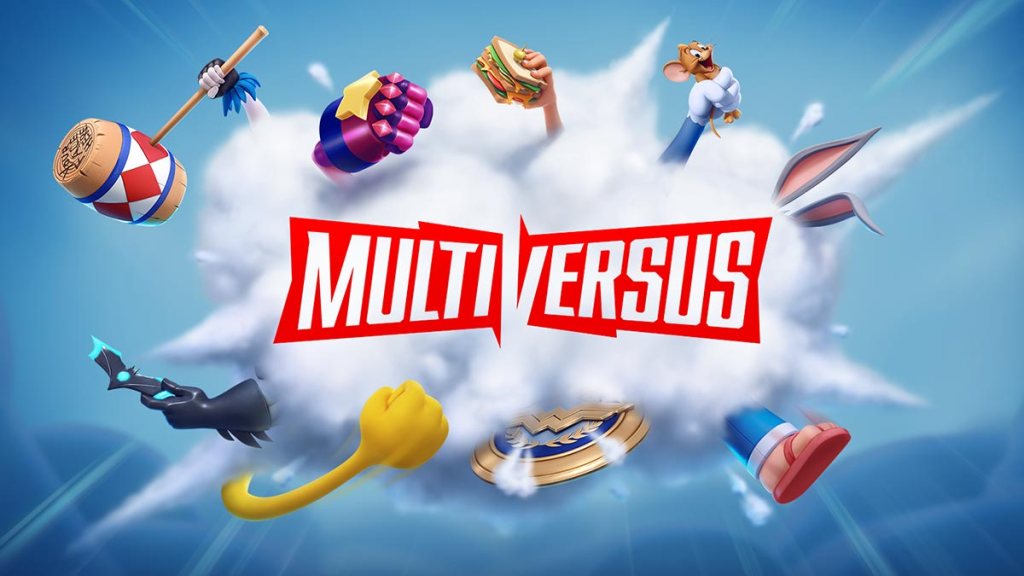
The Warner Brothers crossover platform fighter that won an award at last year’s Game Awards? Great. While I had a few issues with the gameplay, I generally found it to be a fun enough game with a mostly good roster (picking Taz instead of Wile E. Coyote was a waste though). After the game went live in July of 2022, people were excited to pick up this new game and give it a go. The experience was immediately spoiled by the microtransactions inherent to the free-to-play model, but most people could quickly grind out the points for their favorite member of the roster and go from there. I got my hands on Velma and the Iron Giant quickly enough without putting any money in, and that was good enough for me. The two on two gameplay was fresh, the roster picks were solid, the microtransactions were purely for aesthetic features, and the animation and general moveset ideas were excellent (seriously, whoever designed the visuals for Tom and Jerry deserves a raise). There’s just one slight problem with the game. That it still hasn’t released.
Recently, it was announced that the Multiversus beta would be closing down until sometime in mid-2024, when the game would officially release. Now, we all knew the game was initially releasing as an open beta, but at some point, it stopped being treated as one. Alongside the monthly balance updates, there were DLC characters being announced and added in. While this might normally be called the normal addition of characters to a beta, they were being announced and given trailers the same way character were in Smash Bros., not to mention the fact that people were paying for these new additions to be unlocked right away. At some point, the game stopped being a beta and just became yet another live service title. Hell, while the Game Awards have always kind have been a joke, they honored this game with an award for best fighting game of the year. Not the best early release. The best fighting game released. Everyone had come to the rightfully supported conclusion that the game was out, and nothing to dispute this was ever stated. As the game grew stale and lost much of its player base, the beta is now closing down, reminding everyone that it was actually a beta all along.
So what’s the problem with this? Well, for starters, people have pumped money into this product that has been removed from their libraries. While I’ve never been one to buy cosmetics, I know people that enjoy that, and it cannot be overstated that some people have spent upwards of $200 on this game that doesn’t exist. And now they simply won’t have it or anything they spent real money on for at least a year. Games getting patches and updates is a relatively normal thing nowadays, but this officially marks a change in the industry that is completely unprecedented. With the only existing versions of some games being digital copies, we now live in an era where companies can say “no, the game’s not finished. Give it back.”
I’ve seen people (or perhaps just bots, it can be hard to tell) excited by this announcement on Twitter, and my question is, why? The game was in a fully functional state, with new content being added while bugs were being fixed and balance changes were being made. Outside of saving some money by shutting down servers, what is the actual benefit to this tactic? It doesn’t benefit the players, who could already put the game down for a week and wait for the next update if something was wrong and needed patching. It doesn’t benefit the developers, who had the benefits of free, live playtesting to help them make decisions. And it certainly doesn’t benefit the people who have already dropped hundreds of dollars on a game they’re no longer allowed to play. Now, if I had to come up with a real theory for why this was happening, I think the answer could be summed up with three words: hype based marketing.
I mentioned earlier that the game had a declining player base. Steam Charts is a wonderful resource that shows us exactly how many people are concurrently playing a game at a given time, while also tracking the highest number of players the game has had in different time periods. The above screenshot is the data from the day of my writing this, April 5th 2023. The game’s averaging around 400 players per day, when it had a peak of 153,044, and has been on a steady decline over the last six months. In other words, the game is dying. So Warner Bros., or whoever it is that makes the decisions for their game studios, has chosen to shut it down because it’s not currently profitable, and plans to “officially release” the game in another year. The benefit to doing this is that one year is an eternity in internet time, so people are going to forget about the game’s flaws. It will also give them time to put together new trailers to get everyone hyped up for the game again, probably with 3-5 new characters for the rerelease. Scooby, Daenerys, Raven, Johnny Bravo, The Wicked Witch of the West, or whoever else they can come up with might be used as the new face of the game’s marketing when that time comes, once again changing people’s immediate perception of the game and building up hype for it once again. All with the goal of making the game profitable by ripping it away from the people who have already sunk money into it. Would I be immediately hyped for those characters if I was still playing the game? Of course. But you could also add them in to the existing game without the antagonistic and predatory practice of making your audience pay to test your game. I won’t be returning to Multiversus when it eventually does rerelease, not just because I got bored of the game, but because this is beyond insulting to the people who would have formed the game’s community, and because a game that’s only played while it has an internet hype train backing it probably wasn’t that enjoyable to begin with.
This article isn’t just about Multiversus though; it’s about the precedent Multiversus is about to set and the impact it might permanently have on the industry if the game succeeds upon rerelease. This is a company gaining the ability to, for all intents and purposes, release a fully made game, and then take it away from the players later, using the initial reviews and hype of a game to build up its image and effectively sell it twice within the same console generation. And if you’ll think back on some other industry controversies over the past few years, you’ll realize this isn’t just a risk with online games. Remember when the Xbox One got pushback for the fact that it required an internet connection to play single player titles offline? What if a similar “feature” functions by contacting a server and confirming the game is set live? The technology is already there for even a physical game to effectively be deactivated because the server it needs to reach to allow you to play is offline. The same model could be used to sell a single player game on a disc or cartridge, shut down the server for a short while, let’s say eight months, and then set it live again to resell the game with drummed up hype while potentially luring early buyers back in with a new set of cosmetics. If we enter the era where it is okay for a company to take back a functional product, and in which the technology allows them to do so without customer consent, then there will be no going back.
There was a time before patching games, when we bought the game and whatever the situation was, that was what we played. Don’t get me wrong, I also appreciate companies supporting newer titles and patching out bugs so that whatever I’m playing doesn’t freeze if my character stands the wrong way while taking an elevator. But there was also a time when we lived with that. Skyrim, while not a game I particularly care for, was incredibly beloved in spite of the fact that it was frankly a buggy mess. I have no sympathy for companies releasing unfinished games with the intent to make them good later via patches (we all remember release day No Man’s Sky, I’m sure), but the move Multiversus is taking brings this concept to a brand new level. Should gaming companies have the right to release a beta for free playtesting? Yes. Should they have the right to charge people money and sell them products that will be taken away the second the best has closed? Absolutely not. There are plenty of ways for companies to host a beta without doing this. Just look at Street Fighter 6 for an example that isn’t costing hundreds of dollars just because you were curious about a new title. I might be coming off as a little paranoid for believing it would be possible to remotely disable physical titles en masse, but the problem is still one that can affect anything that relies on a server. A move like this becoming standardized across the industry will lead to it being a risk across many genres: fighting games like Multiversus, MOBAs like DOTA, sports games like Madden, shooters like Call of Duty, asymmetrical titles like Dead By Daylight, any racing or party title with online play like Mario Kart, etc.
The only true way to make our voices as an audience heard is with our wallets. So this is me humbly asking you, one of the twenty something readers of our humble little blog, please don’t touch Multiversus when it returns, regardless of what content has been added. And please spread this around. If not the article, then at least the general sentiment. There’s so much bad in the industry as is, as we already deal with AAA companies releasing borderline unplayable messes like Fallout 76, predatory microtransaction systems built into mobile games, and paid DLCs that are only sometimes worth the price of entry. Do we also really need to deal with the threat of a game we bought just not existing for a while, because the company wasn’t quite satisfied with its performance? This is the first time a game is really making such a bold move, and if it succeeds, we risk it setting an industry standard. If loot box controversies and the modern era of gaming has taught us anything, once something becomes part of the industry standard, we don’t have a way to go back.
 Nerdcrash!