Welcome to the first iteration of the series, You Know What Grinds my Joysticks? In this series, I go on long and sometimes explicit rants discussing the biggest problems in the gaming industry. In this first article of the series, I’ll be talking about live service games and the impact they have on the industry.
Live service games, also called games as a service, were first introduced during the MMO craze, especially after the release of World of Warcraft. The whole idea behind a live service model is to generate income for a game after release. Maintaining a steady revenue stream. Back then, the live service game model was simply a subscription plan to play a full free to play game. MMOs were free to play to attract an audience to basically sample their game and then if they liked what they saw, pay a monthly plan of let’s say $7. Using the revenue from these plans, MMO design teams would create new content to give to its player base to warrant the monthly subscription. Kind of like how Netflix is desperately trying to throw any movie or show against a wall to see if it sticks every month. These subscription plans would later evolve into the modern-day Xbox Game Pass and EA Play, paying a monthly fee to have a discount on games and to have first crack on their release. Now back then, this was a reasonable model, as this was the only way a FTP MMO could make money. Plus, the prices were pretty cheap. But this all changed when one company decided to take the idea of live service games too far.
In 2006, Bethesda Softworks delivered the gaming community its fourth title of the Elder Scrolls series, Oblivion. The game is generally loved by the community and modders are hard at work recreating the experience on Skyrim to remaster the game. But one small addition post launch of the game changed the fabric of the industry forever. The dreaded gold horse armor. Thunder and lightning strike in the distance. Dun-dun-duhhhh! You get the picture. Now this was an optional purchase of $2.50, in 2006 cash, but this was considered the first microtransaction. A microtransaction is any form of a one-time purchase that is added to the game via download. Downloadable Content, or DLC for short. These can come in the form of cosmetics, like weapon or character skins; full expansions to a game’s story; or even additional mechanics. Now some of these are more… respectable than others. DLCs in the form of expansions are generally more liked by gamers. One only needs to search for the Dragonborn DLC for Skyrim or Blood and Wine for Witcher 3 to see what an expansion with effort can do to a game. Expansions also came in season passes, which were a way for gamers to save money by buying all the future expansions at once over piecemeal purchases. See the Fighter Passes 1 and 2 for Smash Ultimate as an example. Now it’s frowned upon in the gaming community to have DLCs, but for games that have a full-fledged road map over the course of the next two to three years of constantly adding content for a reasonable price, gamers would look away. I’m the same way. When Fallout 4, one of my all-time favorite games, came out, I bought the season pass to the game because I wanted to experience more of the game. However, as good natured as these DLCs can be, they are in all in reality a heavy toll on the community. They opened the door for something more sinister to arrive on the scene, the lootbox.
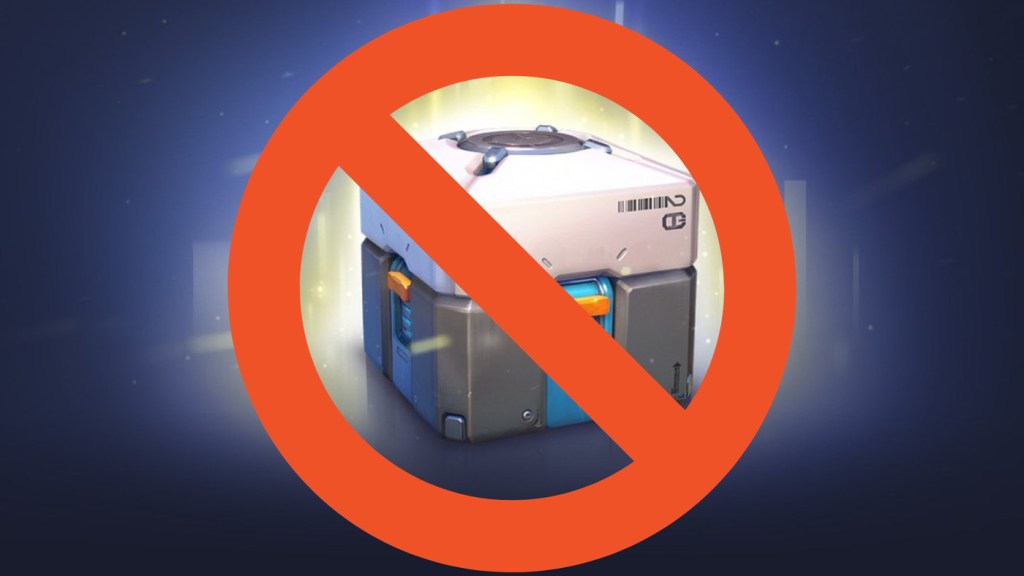
The devilish company that single handedly ruined the gaming industry is also the company that has been voted on multiple times as the evilest company in the world. How fitting. You know them. You hate them. Its Electronic f***ing Arts, or EA. EA is infamous for buying a small studio, milking them dry of games and content and then shutting down the studio (rest in peace Maxis and Pandemic). In March of 2009, in the game FIFA 09, EA released a new mode for the game called Ultimate Team. In this mode, players could create their ultimate dream team of any combination of players from the sport. The only catch is they have to open random booster packs that contain random players at different rarities. Think a trading card game pack. EA would generate millions in revenue from in-game purchases from this mode, and because of that, EA has transplanted this mode into every sports game it has made since. EA’s value shot up $29 billion since 2012, where most of that growth stemmed from microtransaction purchases. Soon, every big developer wanted a piece of the action. Blizzard launched Overwatch with a lootbox system for character cosmetics. League of Legends and SMITE, two competing MOBAs, added loot boxes to their games. All inclusions of lootboxes had the same reward for players, new skins that merely changed the color of the character you are playing. Nothing more than that. Some games took this a step further by introducing a store that allowed players to pick up skins and cosmetics they wanted through new exclusive currencies that can take hours to collect, or just your mom’s credit card. Now you might be thinking: I play a game with tons of microtransactions, and I don’t pay a cent! Well first of all, good for you. Have a medal. But a handful of players not buying into this system isn’t going to cut it. It’s already too late, developers are already high on the microtransaction bug and they can’t get enough. Even if you yourself aren’t a whale, someone in the target audience of microtransactions who pays big bucks for cosmetics, playing the game itself can be harmful. High player counts equal attraction which equals more players which equals more whales which equals more revenue. Almost every free to play game has some form of microtransactions in them from full triple A titles to the sh**ist mobile game. It’s a f***ing pandemic. And the only cure is to stop playing. Boycott these games, but even then, that’s not enough; the system simply evolves.
The newest iteration of microtransactions in videogames is the battle pass, a system where players complete challenges or matches to earn point to unlock cosmetics and currency through a certain time period. Battle passes came to be when… let me check. Oh f*** EA again. When EA attempted to add lootboxes to the sequel of the Star Wars Battlefront reboot, where actual game mechanics were essentially gambled on, there was a massive backlash from both gamers and Star Wars fans. You don’t f*** with a fanbase of a top ten global IP. This backlash brought boycotts of the game, EA’s stock dropping, even legal action, and government regulation against lootboxes. Yeah, the backlash was loud enough for governments in the EU and Australia to look and see that lootboxes were essentially gambling but for kids. And you don’t f*** with kids. Where’s the US? Oh they have their head in the sand as usual. But essentially, Battlefront 2 changed the game. Lootboxes were taboo. Enter…. Christ again EA stay the f*** out of the limelight for once! Though technically not the first game to have a battle pass, that honor goes to Valve’s DOTA 2, EA’s game Apex Legends was one of the first to bring battle passes to the main stage. Soon everyone was ditching lootboxes for battle passes, every shooter and MOBA had one now. With a new battle pass coming out every few months or so for these games, offering skins of characters from other universes or other dull cosmetics. Since then, microtransactions haven’t developed any further. But their impact on the industry has been a colossal travesty.
Games as a service has prompted game developers to put less time and effort into their art. Upper management and directors push games out the door half done but make sure a shop or a battle pass is attached for extra revenue. The mobile game side of the industry is looked upon with disgust in the West, but in Asia, where gaming PCs and consoles are hard to come by and phones are the only means to gaming, companies rack in billions. Especially in Gatcha games, a genre of mobile game where players spend money on purchasing character summoning items in order to catch them all. But it’s not fun like Pokemon, with cute or cool monsters. Gatcha games have hot and sexy female characters to appeal to a male audience. Essentially gatcha games are powered by penises. Then you have games like Diablo: Immortal and Fallout 76, games made by triple A studios but with so little effort the games are either a bug filled mess or a f***ing grindstone.
Now there are exceptions of course, No Man’s Sky and its famous comeback made it a darling of the gaming industry by making all of its future expansions free to its player base. However, one cannot overlook the absolute disaster of a launch the game had. A whole other article can be written on Hello Games and the No Man’s Sky launch, with many of the results similar to those discussed here. Then there are games like Deep Rock Galactic. A game about playing as space dwarves who work for a mining company. Yes, this game has microtransactions that you pay for. Yes, it has a battle pass, but the thing that makes Deep Rock different is that all of the actual gameplay and events are free. And to top it all off, all of the cosmetics are earnable in game! Even after the season is over, you can obtain the items you want through playing the game.
The point that I am trying to make here is that live service games, with all of their microtransactions and penny pinching strategies, are the embodiment of corporate greed in the gaming industry. Everything that I despise about the free market. Cheap and terrible products with no physical value are being sold to children and young adults, fueling addiction. Many governments, not the US cause of course not, are attempting to curve the growth of this side of the industry by placing age restrictions or warning labels. But I bought Black Ops I when I was in middle school so that strategy works. The key to victory here for gamers and consumers as a whole is to learn restraint. Sure that skin may look cool, but is it worth it? Is it worth the $10 price tag to look different, to have a few extra pixels? Nowadays the good forms of DLC in terms of content are becoming free, such as new maps or stories, but the damage has been done. The industry is at an impasse and it’s up to the gamers to rise up and make a difference. And stop buying f***ing Naruto skins on Fortnite, just go read the manga already!
 Nerdcrash!